 Published November 27, 2025
  read
read
771 area code spam calls: political texts, scams, and how to stay safe
771 is a United States area code covering the Washington, D.C. area. It’s an overlay for the existing 202 code and has only been around for a few years. The relative unfamiliarity makes some people wonder whether calls from area code 771 are legit.
The short answer is yes: many people use the code, including ordinary D.C. residents, some government agencies, political campaign PR teams, and businesses. At the same time, the District of Columbia association lets spammers more credibly pose as government agencies or campaigns. If you get an “urgent” call from a supposed government entity and the person on the line presses you for your SSN, financial details, or other sensitive data, it’s probably a scam.
Where is area code 771?
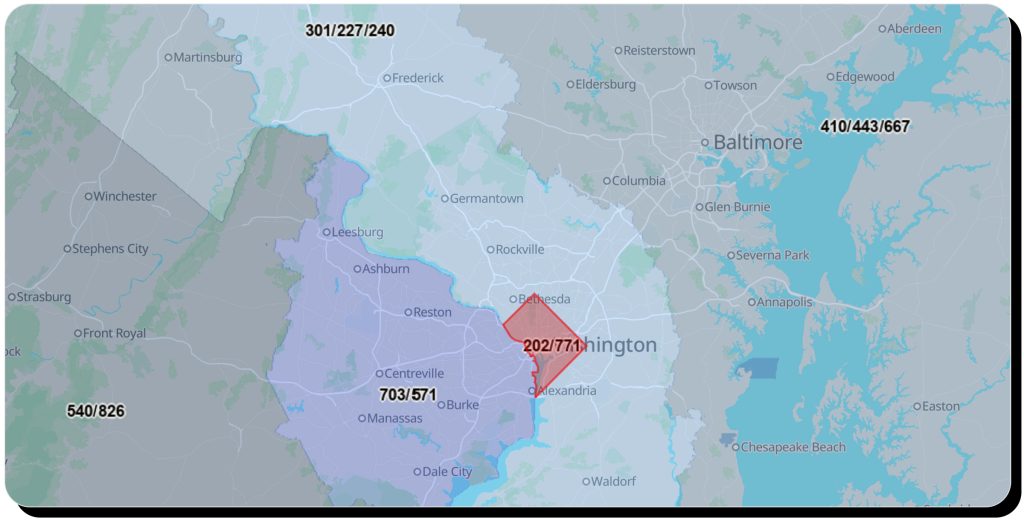
The 771 area code location is Washington, D.C. It serves the same geographical area as the old D.C. area code (202) that’s been in place since 1947.
771 is what’s known as an overlay. In densely populated numbering plan areas (NPAs), the 9,999,999 possible 7-digit numbers for an area code eventually run out, and a new one needs to be added to the same NPA. In 2021, this happened with Washington, D.C.—stirring up a bit of an “identity crisis” in the process.
Since 771 is just a few years old, many people who don’t know about the overlay assume it’s always spam. Some people confuse unfamiliar U.S. area codes with international scam numbers, such as those from the Caribbean that mimic U.S. dialing formats.
Who calls from the 771 area code?
Ordinary residents, businesses, government entities, and service providers in D.C. are all likely to have either a 202 or a 771 phone number.
However, as a hub for government services, Washington, D.C. is also an obvious call spoofing location for criminals trying to take advantage of people’s trust in institutions. Before the 771 area code came into play, there was a lot of 202 spoofing, including a flurry of scams impersonating the FBI back in 2020.
The District of Columbia is also a place you might expect political campaign texts to come from. But many political texts are actually scams designed to capture your personal info.
On the other hand, it’s not always about pretending to be the U.S. Government or a campaign. A lot of times, scammers just know that you’re more likely to pick up if you see an area code representing your locale or one that’s close by—this isn’t unique to 771.
Common area code 771 scams
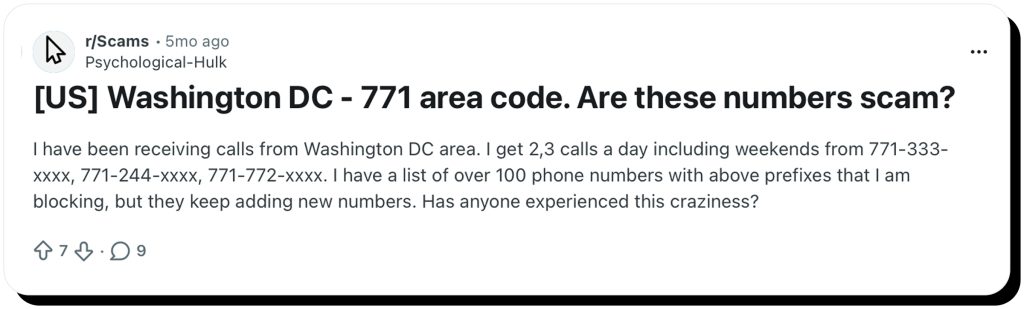
Generally, scams in the 771 area code have a lot in common with those “coming from” other U.S. locations. (Quotes are used because the actual scammers may even be located outside the United States.) You might get:
- Scam calls saying you’re behind on your taxes and urging you to pay up immediately, over the phone.
- Someone calling to say they need your Medicare number or bank account info for a “new Medicare card” or an equipment claim.
- Texts asking for political campaign donations, which will go to a scammer’s bank account instead. Some fraudsters might even use AI to mimic the voice of your preferred candidate.
- Scams saying you’ll win a prize if you participate in a political survey—but, of course, you have to hand over your credit card info to get started.
- Callers telling you that you need to give them your Social Security number (SSN) before you can register to vote.
A lot of these scams employ a sense of urgency to get you to act without thinking. For this reason, the Federal Trade Commission (FTC) makes it very clear that they will never ask you for money or personal information over the phone.
How to tell if a 771 area code call is a scam
Knowing how to spot fake and dangerous calls from 771 starts with understanding how real government agencies and trusted institutions will approach you. These organizations won’t threaten you or try to force you to stay on the line when you get suspicious—these are scammer tactics.
That said, technology these days is making the fakery more and more believable. With area code spoofing, AI voice cloning, and the amount of information available about people on data broker sites and the Dark Web, fraudsters have powerful tools in their arsenal.
Because of this, it’s a good practice to let unknown calls go to voicemail. You can then use reverse lookup tools to figure out if the phone number that called you has been associated with past scam activity. Dedicated apps like Hiya or Truecaller can also help filter incoming calls and detect spam before you even answer.
Another good idea is to register for Do Not Call. This will cut down legitimate telemarketing calls and give legal recourse. Fraudsters, on the other hand, don’t follow FTC rules, so if promotional/ sales calls still target you, you’ll know they are likely scams.
What to do if you receive 771 area code spam calls
Here are some actionable steps you can take if you suspect you’re being targeted by area code 771 scams:
- Don’t be fooled by a legitimate-looking caller ID. Remember, this can be easily spoofed by criminals with VoIP technology.
- If it’s a text from a legitimate political campaign, you can reply “STOP” and then block the number. (It’s great to donate to political causes you feel strongly about, but you also have the right to not be spammed.)
- If the caller purports to be from a trusted institution like a bank or a government agency, hang up and call the official number listed on the institution’s website. Don’t share any personal information with a caller that solicits it—particularly if the caller tries to pressure you.
- As best you can, try to avoid answering “Yes” or “No” to any questions posed to you by an unfamiliar caller. They could be using your responses to clone your voice with AI.
- Never click the links in texts. Instead, go to the official website directly in your browser, log in to your account if necessary, and find the information there.
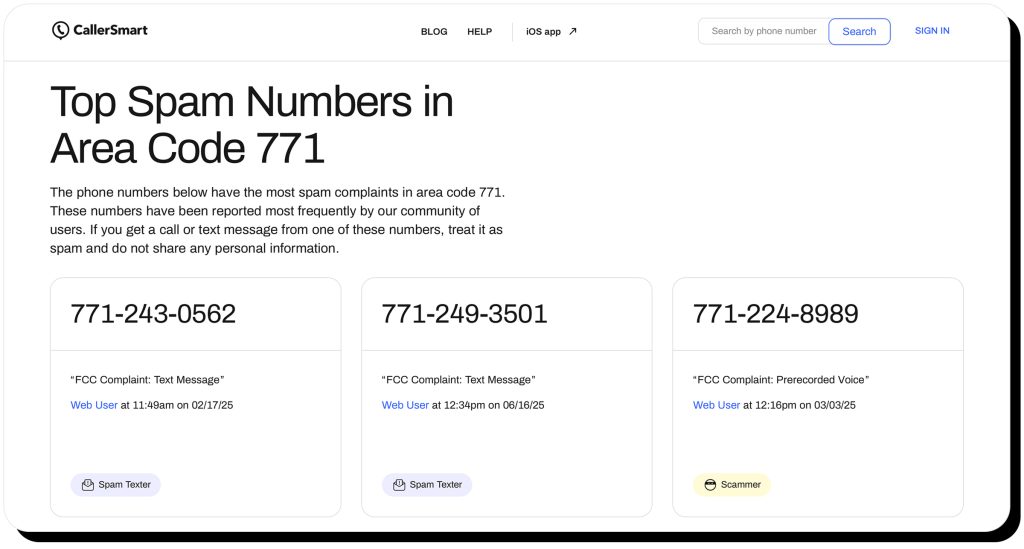
- Report any scam text messages that go against the rules of the Federal Communications Commission (FCC) by forwarding them to 7726, which spells out “SPAM” on the telephone keypad.
- Make sure your phone number isn’t published online. This includes removing it from social media, people-search sites, blogs, and other public pages.
How Onerep protects you from spam calls
Your phone number is one of the easiest personal details to find online—all thanks to public data brokers, AKA people-search websites. These also reveal your home address, location history, family ties, employment history, job title, political affiliations, and much more.
Having such sensitive details exposed on the Internet makes you more susceptible to manipulation. For example, if fraudsters can determine your political leanings, then they can serve up calls that name issues you’re passionate about and sound like they’re coming from your preferred candidates.
Onerep protects you by removing your personal information from 317 people-search sites. The service scans the websites to find the pages where your data is published and requests removal on your behalf. After that, Onerep continuously monitors people-search sites to make sure your info is really removed and doesn’t reappear later.
This way, your phone number, name, address, and other private data stay off the public web and aren’t easily available to scammers.
FAQs
What area code is 771?
771 is a legitimate U.S. area code serving Washington, D.C. It’s an overlay for the original area code 202, as that code was projected to run out of new numbers in 2022.
Who calls from area code 771?
Washington D.C. residents, businesses, and political campaign teams can all call from area code 771. However, spammers can use 771 phone numbers as well, and they don’t need to actually be in that location due to call spoofing. If you’re worried a call is spam, let it go to voicemail and check the number with reverse lookup tools.
Are calls from area code 771 scams?
Calls from the 771 area code aren’t necessarily scams as the code serves legitimate individuals and entities in Washington, D.C. In case you’re not 100% sure who’s calling, it’s better to be careful and avoid giving any personal information or paying money over the phone. If someone claims to be from a trusted institution like your bank, hang up and dial the official number on the bank’s website.


Mark comes from a strong background in the identity theft protection and consumer credit world, having spent 4 years at Experian, including working on FreeCreditReport and ProtectMyID. He is frequently featured on various media outlets, including MarketWatch, Yahoo News, WTVC, CBS News, and others.