 Published February 18, 2026
  read
read
What to do if someone has your driver’s license number: signs, next steps, and risks
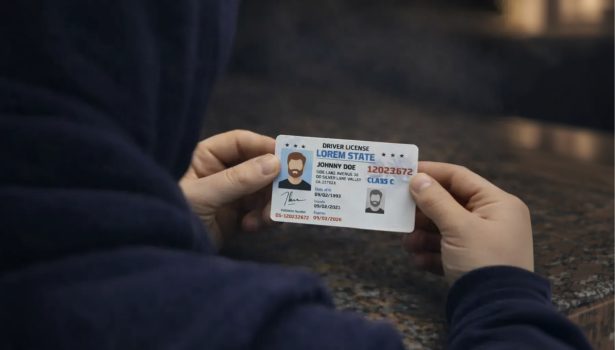
As a form of government-issued ID, a driver’s license is a valuable piece of personally identifiable information, especially for scammers. Knowing your driver’s license number, bad actors can piece together your identity and sell it on the dark web. Someone can use your address for DMV purposes or add their traffic violations to your record. They can even take out loans and file insurance claims in your name—but luckily, for this they will need much more personal information than just a license number.
This guide explains whether someone can steal your identity with your driver’s license number, the signs your driver’s license can be misused, and the steps you can take to keep your license from being exploited.
What can someone do with your driver’s license number?
Your driver’s license is one of the most sensitive documents you own. It’s a government-issued identifier that many organizations treat as proof of identity, so it’s frequently used in identity checks. Someone who has your driver’s license number, either on its own or together with other personally identifiable information, can misuse it for identity and financial fraud.
So can someone steal your identity with your driver’s license number? Yes, but in most cases, this would require additional personal details beyond just the license number.
On its own, a driver’s license number has limited power but can still be misused in the following scenarios:
- Identity checks: as some services use a license number as an identity-confirming detail, fraudsters can attempt identity verification abuse to pass basic identity checks using your driver’s license number. In one example, a person reported their driver’s license number being used during in-store authorization to purchase an iPhone and connect it to the fraudster’s account for monthly installment payments.
- Fake or altered IDs: a real driver’s license number can be used on fake or doctored IDs, though this also requires a matching name and photo, along with adherence to an accepted state format.
- Traffic or citation misuse: someone can give your license number during a traffic stop or citation, but this is often caught by law enforcement systems and is a risky tactic for the offender.
More serious types of misuse and fraud typically require additional personal information. A driver’s license number on its own is also ineffective in the following cases but can become a valuable missing piece if a scammer already holds other information about you, such as name, address, date of birth (DOB), full or partial Social Security number, email address, or a full scan of your driver’s license:
- Insurance fraud: filing claims or receiving payouts typically requires your name, address, and vehicle details in addition to the license number.
- Employment misuse: if needed, employers verify licenses with full identity details, often requiring the physical card.
- Financial fraud: taking out loans in your name and opening new financial accounts usually requires multiple identifiers (SSN, national ID, address, phone number).
- Selling data on the dark web: your license number can be bundled with other leaked or stolen data and sold on the dark web as part of an “identity package.”
- Creating a synthetic identity: fraudsters can mix real and fake personal information to create a new believable identity. In this case, a license number can be added to make the identity look more legitimate.
- SIM swapping: scammers can trick your phone carrier into moving your number to a new SIM they control. If successful, they can use it to intercept your verification codes and take over your accounts.
- Intercepting mail: if fraudsters have access to your mailbox and enough information to submit a USPS change-of-address request, they can redirect and steal your physical mail.
- Accessing your tax refunds: fraudsters can file fraudulent tax returns and claim refunds.
An important takeaway is that misuse of a driver’s license number becomes risky only when combined with other personal data and a photo or scan of the license card. However, with billions of personal data records circulating online—on data broker websites, data breach dumps, the dark web, and through data leaks, chances are fraudsters will have multiple ways to access and piece together your identity details unless you thoroughly protect them.
Signs your driver’s license number may be misused
Some of the primary reasons your driver’s license number may be misused include falling victim to a driver’s license scam or a data leak involving this information.
Whether through a phishing message you unknowingly interacted with, a direct phone conversation with a scammer, a data breach, or an unintentional data leak by a third-party company storing your data, you might have shared your personal details, license number included, and now worry about the implications.
Answer the following questions:
- Do you suspect you have recently been in contact with a scammer?
- Do you suspect you might have handed over your driver’s license number to a fake employer or a government agency impersonator?
- Did you share only the license number, or also a photo or scan of the license card?
- Did you include other personal details and identifiers, such as full name, DOB, address, SSN, account numbers, PINs, etc.?
- Have you been recently notified that your personal data has been leaked, or discovered it yourself (through services like HaveIBeenPwned, for example)?
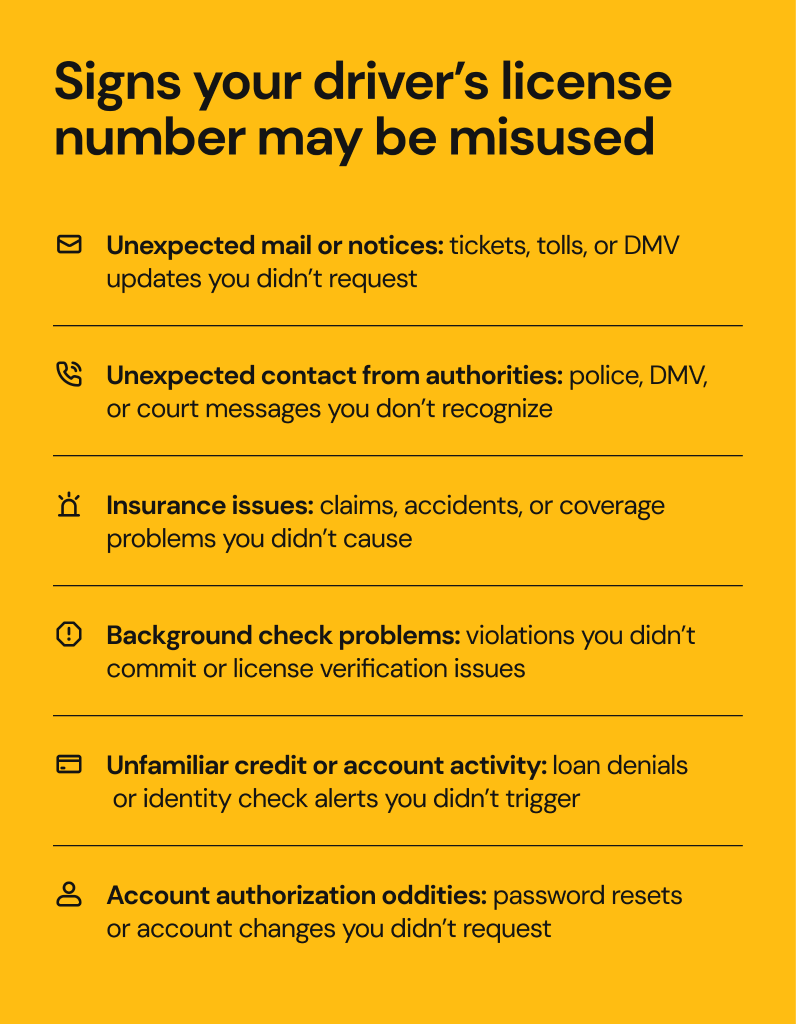
If you answered yes to at least a few questions above, you should stay alerted to the following signs of your license number being misused. Many of them overlap with common signs of identity fraud, and that’s not accidental, as both involve abusing your personally identifiable information:
- Unexpected mail or notices: you may start receiving mail about traffic tickets, tolls, or violations you don’t recognize, along with DMV notices about address changes, renewals, or duplicate licenses you didn’t initiate.
- Unexpected contact from authorities: you may be contacted by the DMV to confirm information, by the police regarding a citation or accident you weren’t involved in, or receive jury duty or court notices tied to a location you’ve never been to.
- Insurance issues: your insurer may ask about an accident, claim, or driver, or you might run into difficulty getting coverage because of new records you don’t recognize.
- Background check problems: your background checks may show traffic violations you didn’t commit, or your prospective employer may have trouble verifying your driver’s license.
- Unfamiliar credit or account activity: you may receive credit monitoring alerts tied to identity checks, loan denials due to identity verification inconsistencies, or requests to verify information for services you didn’t apply for.
- Account authorization oddities: you may get unrequested password reset or verification messages for your digital accounts, or notifications that your contact details have been changed.
What to do if someone has your driver’s license number
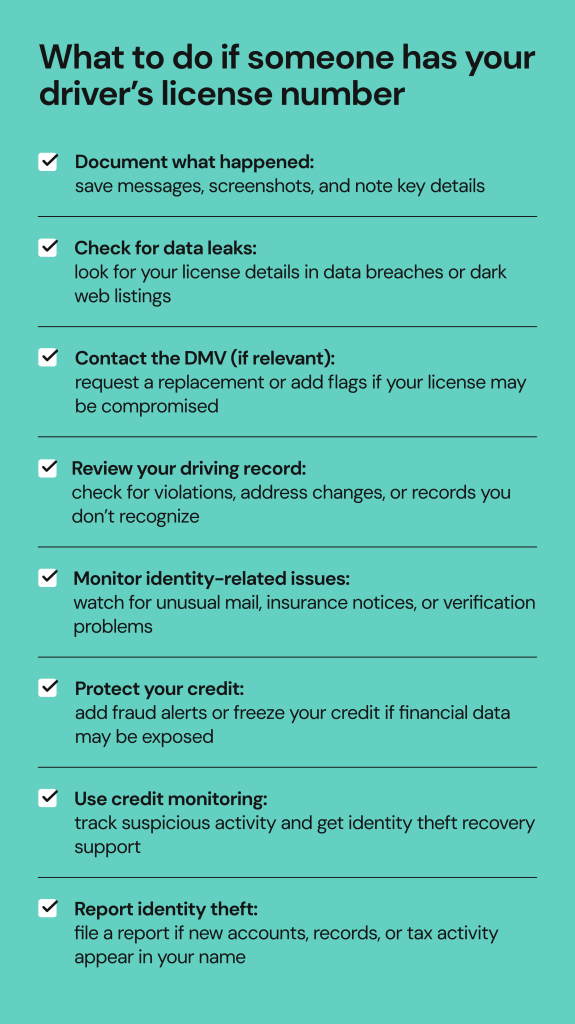
What to do if a scammer has your driver’s license? The good news is that misuse of a driver’s license number mostly leads to administrative confusion rather than direct financial loss, but it helps to take protective steps to secure your identity, digital and financial accounts as much as possible.
Document what happened
Note when and how your driver’s license number might have been stolen or shared with a bad actor. Save messages, screenshots, scammers’ contact details (if any), and keep a timeline of misuse signs to make it easier to track the incident.
If you suspect your driver’s license number has been leaked, you can try to confirm it by scanning the dark web and data leak websites using available lookup services.
Contact the DMV (if relevant)
If you have a reason to believe your license card is in the wrong hands, you may request a replacement from your local Department of Motor Vehicles (DMV).
For example, if you shared a photo or scan of your license, start receiving unexpected DMV notifications, or are told about violations or records you don’t recognize, you may be able to get a new license number, along with having notes or flags added to your record. You may also request your motor vehicle record to check whether there are any suspicious entries you don’t recognize.
Monitor for identity-related issues
Your identity or driver’s license misuse will often show up first in official mail about tickets, insurance, or license changes. Watch for new notifications and alerts, review your insurance statements and driving records, and pay attention to identity verification problems when applying for new services.
Protect your credit
Protecting your credit can be useful in cases where more than just your driver’s license number has been stolen or leaked.
You can add a fraud alert through your banking provider as a note on your credit file, asking lenders to verify your identity.
A stronger protection is to place a credit freeze with all major credit bureaus (Experian, Equifax, TransUnion) to prevent new credit from being opened without your approval. This is most useful if your financial or SSN information has been shared.
You can also sign up for credit monitoring services that continuously monitor your accounts for signs of fraud. Many of them come with identity theft insurance that covers restoration assistance and stolen funds.
Report identity theft
If you see any of the following signs, report identity theft:
- Accounts opened without your knowledge.
- New credit or tax activity you didn’t initiate.
- New official records added about you that you don’t recognize.
You can report identity theft at IdentityTheft.gov in the U.S. or to a police department or anti-fraud agency in your location.
How to protect yourself going forward
You can protect your driver’s license number from being stolen or leaked before it happens. In the aftermath, it’s often difficult to trace how these details were obtained by fraudsters, so the following tips cover a range of measures that can help protect you from identity theft, social engineering, and other fraudulent exploits.
Be intentional about your ID sharing
When asked for your driver’s license number, inquire why and how this information will be used. When possible, share only partial information, such as confirming your age without providing the full number. Avoid sending photos or scans unless it’s clearly necessary. Never email a copy of your driver’s license, instead, use more secure upload methods when possible.
You should be extra cautious when such requests are unsolicited and feel urgent, even if they appear official. They may come from impersonators attempting to harvest personal information to steal your identity.
Secure physical and digital copies
- Keep your license in your wallet, not in random bags or your car.
- If you have to leave it with valets, car rental desks, or venue, don’t do so for longer than necessary.
- Shred paperwork that contains your driver’s license number and other personally identifiable details before discarding it.
- Store your digital driver’s license and ID images in a password-protected folder or vault, and avoid cloud folders shared between devices. Remove these photos from your phone gallery once you no longer need them.
- Report a lost or stolen license promptly.
Be cautious with online forms
Phishing is notoriously one of the most effective ways to steal someone’s personal data. Disguised as legitimate emails from the brands you use or messages from people you know, these social engineering traps make you submit your personal information to scammers yourself. To protect yourself from phishing attacks:
- Check URLs and email sender domains carefully before entering any ID-related information.
- Avoid forms linked from online ads, unexpected messages, or pop-ups.
- When in doubt, stop and verify the request independently using the official contact details of the real organization or person.
Monitor your records
You should keep tabs on your personal and financial records to spot any signs of abuse in a timely manner.
- You can request free credit reports to review them periodically, even if you don’t have any issues.
- You can request a copy of your motor vehicle report to make sure there are no records that seem off to you.
- Finally, you should watch out for unusual mail, insurance notices, and identity verification issues.
Limit personal data exposure to reduce identity theft risk
One of the most effective ways to protect yourself from identity theft is to remove your personal information from publicly available sources so scammers can’t easily find it.
Onerep, a personal data removal service, identifies where your personal information is stored online without your consent, submits opt-out requests on your behalf, and continuously monitors for reappearance and new listings.
Limit your personal data availability and leave fewer doors open for fraudsters to link it to your identity and exploit it.
FAQs
Can someone find my driver’s license number online?
Generally, no—driver’s license numbers are not listed publicly online but they can be leaked and published on sources like dark web marketplaces as a result of a data breach, a phishing attack, or a cybersecurity incident.
What happens if someone uses my address at the DMV?
If someone used your address for DMV purposes, you’re likely to start receiving mail with renewals or notices meant for someone else. In some cases, you may be asked to confirm or correct information. Contact the DMV to have the records corrected.
What if I lost my physical license?
If you lose your physical driver’s license card, you should request a replacement as soon as possible. You should also watch out for unexpected DMV and insurance notices, as well as identity verification issues that reference driving records.


Dimitri is a tech entrepreneur and founder of Onerep, the first fully automated data removal service. Top cybersecurity CEO of 2021 by The Software Report.