 Published January 13, 2026
  read
read
628 area code spam explained: real examples and prevention tips
As spam calls continue to be an ever-present nuisance, many people are paying attention to the particular area codes of unrecognized callers. One of the codes that’s been showing up a lot recently is 628—a number associated with San Francisco and parts of Marin County.
However, it could well be a legitimate business or a local government agency. If it is a scam, then the 628 phone number may be spoofed, meaning that the scammer isn’t even located in SF.
In this article, we’ll take a look at how bad actors spoof numbers, why they choose particular area codes, and what to do if you answer a spam call.
Where is area code 628—and why do scammers use it?
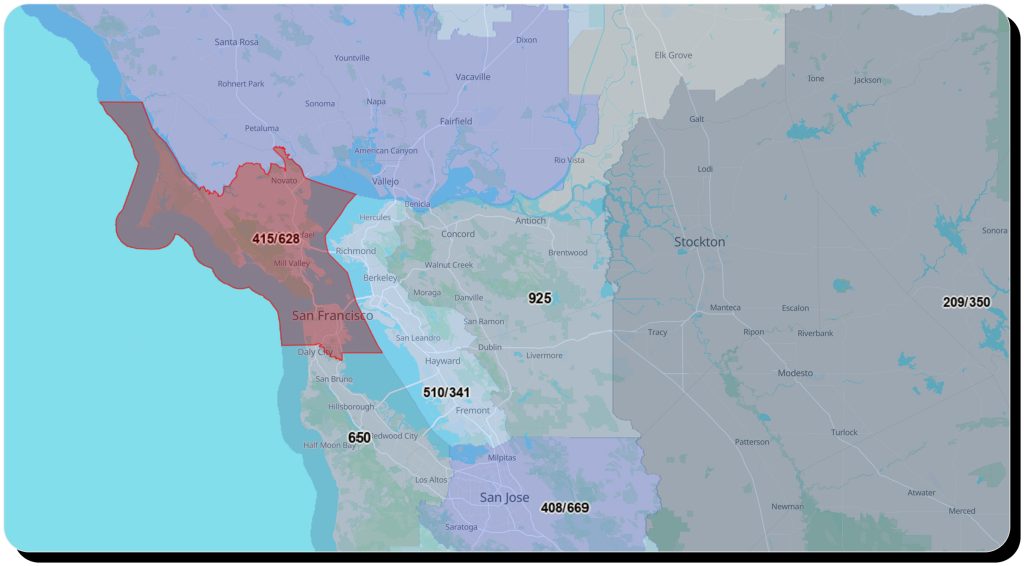
The USA 628 area code covers San Francisco and parts of Marin County, California. It’s an overlay for area code 415, meaning that new 628 numbers started being assigned once the region came close to exhausting all possible 415 ones.
It also happens to be a familiar region, which is what scammers prefer. They’re banking on the idea that you’ll recognize the 628 area code location as San Francisco and think it’s a caller you can trust.
However, an illegitimate caller might not be anywhere near SF. They might not even be in the USA.
How scammers spoof 628 numbers: the tech behind the fraud
It’s actually pretty easy to spoof an area code if you’re using Voice over Internet Protocol (VoIP). This technology shunts phone service through the internet instead of a phone carrier, and (among other things) it allows the caller to submit whatever number they’d like to show up on the receiving end.
There’s often no reliable way for phone companies to verify that the Caller ID number is correct, and VoIP was initially so expensive that only businesses were likely to use it. Now that it’s much cheaper and accessible to individuals, the security risks of enabling people to spoof numbers have become blatantly obvious.
With the STIR/SHAKEN protocol, there’s been some effort to clamp down on Caller ID spoofing by requiring carriers and VoIP providers to authenticate calls with digital certificates. Unfortunately, this hasn’t been enforced globally, and since it requires compliance from the call originator, callers based in countries that haven’t adopted the protocol can still spoof numbers with impunity.
The most common area code 628 scams right now
There are a lot of scams these days that take advantage of people’s willingness to answer a number that looks legit. Here are the most common ones:
- AI-powered impersonations. Artificial Intelligence has become very good at cloning voices without sounding robotic. Scammers can clone anyone’s voice from just a few seconds of audio found on social media, voicemail greetings, or public videos, then use it to place urgent phone calls that sound exactly like a trusted contact (family member, colleague). In other cases, AI is used to generate realistic emails and text messages that closely resemble those of banks, delivery companies, or tech firms.
- Delivery-related area code 628 scams. These impersonate USPS, UPS, FedEx, and similar companies. They typically say you’re supposed to receive a package but there’s been a problem with your delivery. The goal is to get you to click on a link and submit personal information.
- Loan forgiveness and financial relief robocalls. Scammers can even spoof the numbers of local government agencies to prey on people who are trying to pay off their loans (usually student loans). They’re seeking personal info or trying to extract money.
- Job offer scams that impersonate recruiters. The SF area is known for its hot job market, and lots of job seekers would be thrilled to hear from a recruiter based in the area. Unfortunately, some of these vacancies are actually work-from-home scams hoping you’ll send money for fake “office equipment” to “get started.”
- Cryptocurrency “investment advisor” calls and texts. People report receiving calls or texts from their area code in which the person making contact claims to have found their number in their contacts. This person then proceeds to build up a relationship with the recipient and eventually divulges that they can offer advice on crypto investments. If the recipient goes forward with the “advice,” their money will be lost to the scammer—no crypto ever is received.
What to do if you receive suspicious 628 calls or texts
First, it’s important to take a deep breath and ignore the sense of urgency that the 628 area code spammer is trying to cultivate. Then, do the following:
- Hang up right away. There’s no good reason to keep engaging.
- Block the number. They might call back with a different number, but every little bit of prevention helps.
- Forward the text to 7726 (SPAM). This sends the message directly to your mobile carrier’s abuse and fraud team.
- If a friend or business was impersonated, call them directly. This is a good way to reassure yourself that they weren’t actually trying to contact you.
- Report the call to the FTC. You can do this at reportfraud.ftc.gov.
How to stop 628 area code spam calls for good
Spammers are persistent and—unfortunately—quite innovative. Where there’s a will, there’s a way. But you also have some weapons at your disposal to defend your right to privacy. Here are a few options:
- Register yourself on the National Do Not Call Registry. This won’t stop scammers, but it can reduce legitimate telemarketing calls and make illegal communications easier to identify.
- Have your phone send any unrecognized numbers to voicemail. Go to Settings > Phone > Silence Unknown Callers on iPhone or the Phone app > menu (three dots) > Settings > Caller ID & spam protection on Android.
- Install RoboKiller, Truecaller, or another app that filters calls. They’re not perfect, but they do a pretty good job of keeping spammers from reaching you.
- Opt out of people-search sites. These websites publish your phone number as well as other sensitive details like your home address, relatives, place of work, job title, estimated income, and more online. You can opt out manually or use an automated service like Onerep.
FAQs
What area code is 628?
The 628 area code serves San Francisco and a few surrounding cities. It’s an overlay for area code 415.
How and why do scammers spoof area code 628?
Scammers may use VoIP to make it look like the call is coming from a local number (in this case, from the 628 area). They’re relying on the idea that you’re more likely to answer unknown calls from a familiar area code.
What are some common types of 628 area code spam calls?
Scammers spoofing the 628 area code might be engaging in crypto investment scams, recruiter impersonation/job offer scams, delivery and package scams, or any number of other scenarios that might entice you to give up your personal info or pay them some money.
Who calls from area code 628?
A 628 phone number can belong to a wide range of callers, including legitimate businesses, local services, government offices, and residents in San Francisco and parts of Marin County, California. However, scammers frequently spoof 628 numbers to make calls and texts appear local and trustworthy, even when the caller is located elsewhere—even outside the US.
Mark comes from a strong background in the identity theft protection and consumer credit world, having spent 4 years at Experian, including working on FreeCreditReport and ProtectMyID. He is frequently featured on various media outlets, including MarketWatch, Yahoo News, WTVC, CBS News, and others.