 Published December 9, 2025
  read
read
Area code 914 spam: how to stay safe from scam calls and texts
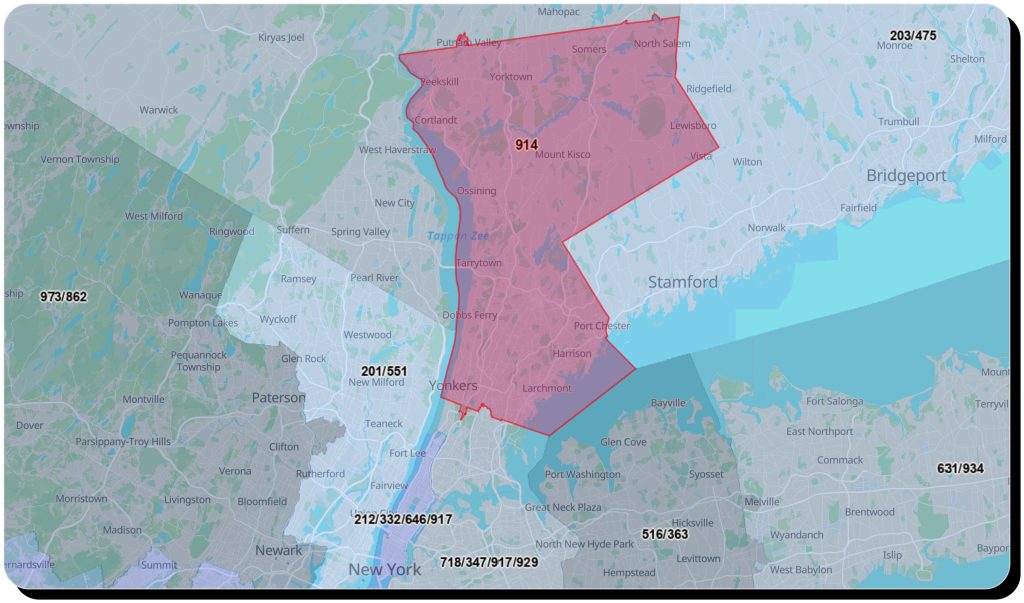
- The 914 area code spans Westchester County, New York, which includes cities such as Yonkers, White Plains, and Ossining.
- Many spam calls and texts originate from the 914 area code, but VoIP technology also makes it easy for scammers to use this code when calling from anywhere in the world.
- You can stop spam and protect yourself from scams by recognizing, preventing, and reporting area code 914 spam calls. Strategies include screening calls with Caller ID and third-party apps, listing your number on the Do Not Call Registry, reporting scammers to the FTC, and removing your phone number from people-search sites.
What area code is 914?
Area code 914 covers Westchester County in the southern portion of New York state, a little bit north/northeast of New York City. It comprises an approximately 450-square-mile area. Some of the largest cities in the 914 area code are Yonkers, New Rochelle, Mount Vernon, White Plains, Port Chester, Harrison, Ossining, and Peekskill.
One of the original 86 North American area codes established in 1947—and the very first area code in New York state—914 once extended to Long Island and other regions. In 1951, Long Island received its own area code (516), and in 2000, area code 914 was assigned exclusively to Westchester County.
How to recognize area code 914 scams and spam
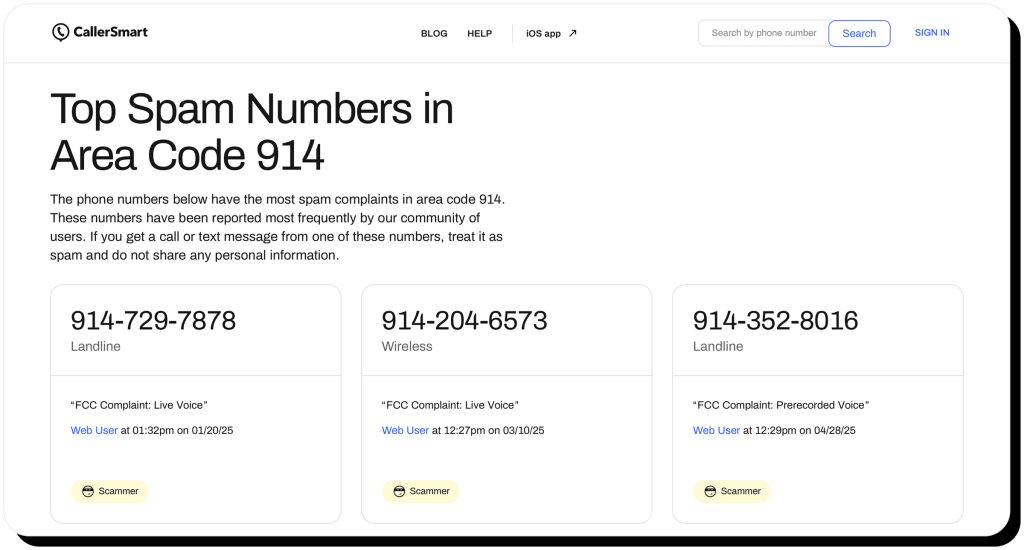
More than a million people live in Westchester County, New York, so most calls and texts from the 914 area code are legitimate. However, in the age of VoIP, anyone can get a phone number with the 914 area code. Moreover, spammers and scammers can even spoof phone numbers to make it look like they’re calling from this area when they’re located anywhere in the world.
In fact, nearly 105 million robocalls were associated with the area code 914 in 2024 alone. That’s why it’s important to learn how to tell when a call from this area is spam. Here are the red flags to watch out for.
Caller ID clues
- Caller ID says “Potential Spam” or something similar.
- Caller ID displays a major company’s name and a 914 area code phone number, but the company isn’t located in Westchester County, New York.
- Common names (John Smith, Tom James), which can be used to trick you into thinking someone you know is calling.
- Frequent unknown calls from the same number or numbers with similar prefixes (914-302-XXXX, 914-303-XXXX).
Call and text content
- Prerecorded, robotic, or AI-generated voices.
- Pauses before speaking.
- Generic greetings (“We’ve been trying to reach you…”).
- Prizes and too-good-to-be-true offers, like calls and texts that state you’ve won the lottery or a drawing.
- No voicemail or vague messages (many scammers don’t leave voicemails, just call or text repeatedly until you answer).
- Requests for personally identifiable information, such as your Social Security number or financial details.
- Prompts to follow a link to change a “compromised” password. These often lead to spoofed sites that look like legitimate ones, but are designed to steal your identity or money.
Aggressive urgency
This includes calls or texts claiming to be from an official entity and asking you to respond, log in, or submit payment immediately to resolve a problem. Examples include:
- A government agency stating your Social Security number has been compromised.
- The IRS saying you must pay a tax bill or risk prison.
- Your bank stating your money has been stolen.
- Tech support saying your computer or phone has a virus.
- Security alerts from major companies like Google, Microsoft, Apple, or Amazon.
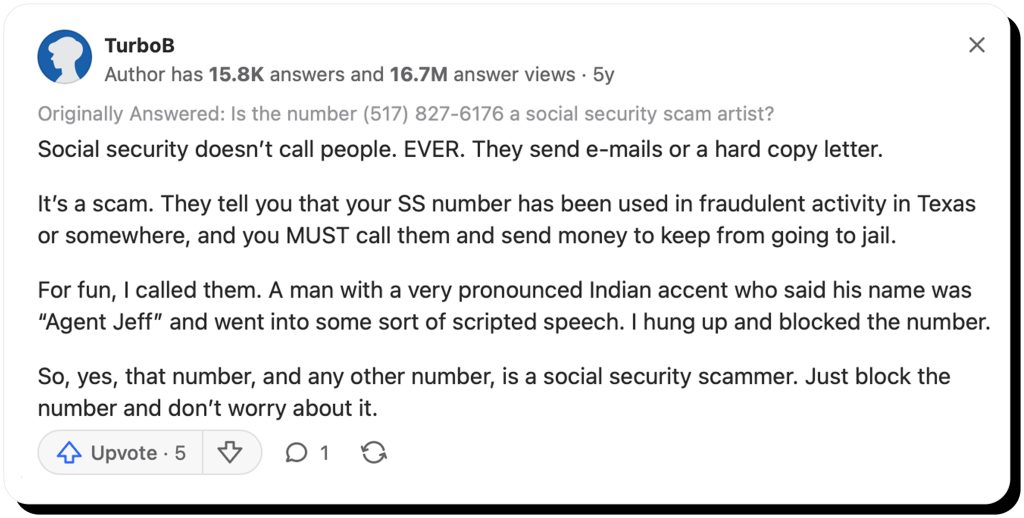
- A call from someone you know asking to help them by urgently transferring money. Nowadays, scammers are able to spoof the phone numbers of people you know and mimic their voice with the help of AI.
How to do your research
To determine whether the caller is legitimate, you can take the following steps:
- Use a reverse phone lookup site such as TrueCaller, NumLookup, and WhitePages to see what names or businesses are associated with the number (but keep in mind legitimate numbers can be spoofed).
- If the call is allegedly coming from a business, go to their official website and check their contact info. You may also reach out to support directly through their site to ask if the number is legit.
- Use a site like WhoCallsMe to see if other people report spam calls or texts from that number.
- Search the number on Google and see what others say about it.
How to prevent area code 914 spam calls and text messages
The good news is that you can prevent many spam calls and texts from 914 and other area codes with these tips:
1. Try Do Not Call Registry
Submit your number to the DNC Registry, and legitimate companies will stop sending spam (however, this doesn’t stop scammers since they act illegally).
2. Use spam blockers
Install spam-blocking apps offered by your carrier or download a trusted third-party app like Nomorobo, Robokiller, or TrueCaller. These apps screen incoming calls and messages, and they can automatically block many scam calls and delete spam texts.
3. Be careful what you post online
Don’t post sensitive information, including your phone number, where scammers and spammers can find it. This includes social media sites like Facebook and online blogs.
4. Remove your information from people-search sites
People-search sites publish your phone number, home address, name, relatives, associates, and other private information on their sites, making it easily available to virtually anyone. Spammers, scammers, and any other ill-wishers can simply look up your name and learn a whole lot of details about you. However, you can remove your data from people-search sites by sending opt-out requests. You can do this manually or rely on an automatic service like Onerep that removes your personal information from 317 websites.
5. Don’t answer personal questions
If you answer a spam call by accident, never give out personal details like your name, address, Social Security number, account passwords, or any other information. As soon as you suspect it’s spam, hang up.
6. Never click text links
If you receive a text with a link to a website, never click it. Even if the text appears to be legitimate, manually visit the site in question, log into your account via a browser/app, or contact the company through their official channels.
7. Screen your calls
In addition to dedicated apps, you can manually screen calls and texts from unknown numbers. Let calls go to voicemail and don’t respond directly to texts. Instead, look up the numbers online to see if they are legit—then reach out through official channels. If the number appears to be spam or a scam, block it using your device.
What to do if you answer a spam call or text from area code 914?
If you answer a spam call from area code 914, hang up as soon as you realize it’s spam. If you receive a spam text, delete it.
If you’re not sure whether the call or text is spam, it’s still better to hang up (or not respond), then research the organization in question to find its official contact channels.
If you believe you’re being targeted by spam or scam calls and texts, you can:
If you accidentally shared personal information, login credentials, or clicked a link and you’re worried you might be a victim of a scam, consider the following steps:
- Contact your bank, credit card issuers, and other financial institutions to warn them and prevent someone from stealing your identity.
- Place a freeze on your credit to prevent anyone from opening new lines of credit in your name.
- Contact local law enforcement to file a report.
- Contact the FTC and FCC.
- Reach out to your identity theft insurance company, if you have one, to see if they can offer any support (note that many homeowner and auto insurance policies include some type of identity theft insurance).
- Change passwords on your accounts.
FAQs
Are all area code 914 calls spam?
No, not all calls from the 914 area code are spam. In fact, most calls aren’t, as the 914 area code serves over one million residents in Westchester County, New York. However, scammers also spoof phone numbers to make it seem that they’re calling from the 914 area, while they’re actually probably somewhere else in the world.
Why am I getting 914 area code spam calls and texts?
Scammers frequently use Westchester County’s 914 prefix to make their messages look local and trustworthy. Thanks to VoIP systems and caller ID spoofing, fraudsters can instantly generate or disguise phone numbers—often choosing recognizable area codes like 914 to increase the chance that you’ll answer. These calls don’t actually originate from Westchester most of the time; instead, scammers rotate through thousands of spoofed numbers to bypass blocking tools. Your number may also be circulating on marketing lists, data broker sites, leaks, or robocall databases, which makes you a repeating target.
Can I block calls from the 914 area code?
You probably don’t want to block all 914 area code calls and texts, as you could miss important legitimate communications. For example, PepsiCo, MasterCard, and IBM all have locations in the 914 region. Instead, use your carrier’s call screening tools or a third-party app to automatically block known spam calls and texts.
If I change my number, will I stop receiving spam texts and calls?
Changing your number might stop some spam temporarily, but it could invite more, as your new number might already be targeted. Eventually, the spammers will find you, so the best prevention is to be proactive: use apps to screen and block spam calls and texts, and limit how much of your personal information is shared online (via social media, marketing forms, surveys, etc.).
Who calls from area code 914?
More than a million people live in the 914 area code, which is also home to major corporations such as IBM, PepsiCo, and MasterCard. That means you could receive legitimate calls and texts from a 914 phone number, but it’s also a popular area code spoofed by spammers and scammers. Use a reverse phone lookup service to learn more about any caller.
Where is area code 914 USA?
The 914 area code location is Westchester County, New York, which is a little bit north/northeast of New York City in the southern part of New York state.


Mark comes from a strong background in the identity theft protection and consumer credit world, having spent 4 years at Experian, including working on FreeCreditReport and ProtectMyID. He is frequently featured on various media outlets, including MarketWatch, Yahoo News, WTVC, CBS News, and others.