 Published October 28, 2025
  read
read
Fake data breach letter IDX: how to know if it’s real or a scam
Data breach letters or notifications are nothing new: companies affected by cyber attacks often partner with identity protection or credit monitoring firms to notify victims and help limit the damage. But how can you tell if a letter you receive isn’t a scam, especially when these partners ask for sensitive personal information in exchange for their protection services?
One such example is data breach letters distributed by IDX in the aftermath of the Change Healthcare data breach—the largest healthcare cybersecurity incident in history affecting more than 192 million individuals in the U.S. While IDX is a perfectly legit credit monitoring services provider, scammers may take advantage of the data breach victims by impersonating it to add yet more damage to the one already inflicted.
This article will explain what IDX is, whether it’s a scam, and how to tell a fake data breach letter IDX from a legit one, with tips on personal security protection.
What is IDX and is it legit?
Is IDX legit? Yes, IDX is a legitimate U.S.-based company founded in 2003 and now acquired by Kingswood Capital Management. It was established to help organizations deal with the aftermath of data breaches and cybersecurity incidents by providing incident response, identity protection, dark web monitoring and credit monitoring services to customers on behalf of the affected businesses.
Throughout the past 20+ years, it has protected 100+ million people and lists Fortune 500 companies and government agencies among its clients.
So is IDX a scam? No, but the company name may be exploited by scammers who’re looking to capitalize on the news of major data breaches and trick people into thinking they’re signing up for legitimate credit monitoring and identity protection services.
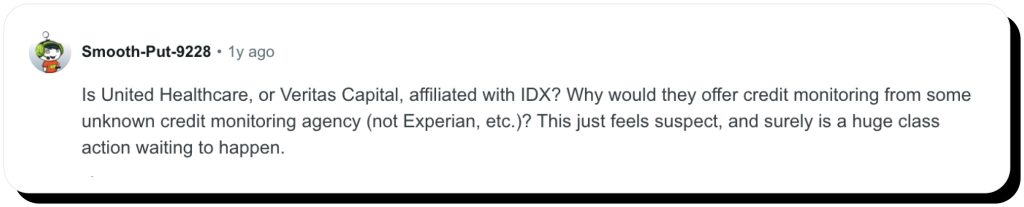
It doesn’t help that data breach notifications are typically mailed by IDX instead of the affected companies, so the brand name is fairly unknown to the common customer. This makes many wonder if IDX should be trusted as they get mail offering them free credit monitoring from a no-name provider.
Why companies use IDX in breach notifications
After a breach, organizations often outsource notification, monitoring, and recovery services to specialized firms like IDX. These vendors help manage large-scale communication, identity monitoring, and fraud resolution, which is especially useful when vast numbers of people are affected.
In many high-profile breaches, offering credit monitoring has become part of the mitigation strategy or legal settlement. For example, in the Change Healthcare ransomware incident, the company offered two years of free credit monitoring and identity protection through IDX to affected individuals. Similarly, in the GAO employee data breach, GAO contracted with IDX to provide free identity protection services to impacted individuals.
Given that IDX’s protection plans start at $9.95 per month, the free credit monitoring offered after a breach can be a welcome benefit for those affected. However, these free offers typically last only one or two years, providing temporary protection that can’t replace a comprehensive, long-term privacy and identity security strategy.
How IDX handles security breaches
It’s important to understand that IDX is NOT the company directly impacted by a data breach, but rather a vendor hired to manage the aftermath of security incidents on behalf of the breached organization. When contracted, IDX typically does the following:
Sends data breach notification letters and/or emails to affected individuals.
- Sends data breach notification letters and/or emails to affected individuals.
- Creates a dedicated, incident-specific portal for enrollment in free identity or credit monitoring.
- Offers services such as credit and identity monitoring, fraud alerts, dark web scanning, and identity recovery assistance.
- Assists breach clients with regulatory- and legal-compliance tasks, such as designing notifications, working with breach counsel, and ensuring required disclosures.
Data breach remediation services offered by IDX to affected individuals are optional. It’s always up to the customer to decide whether to use IDX’s offering, or pursue alternative monitoring or protection tools on their own.
Why fake data breach letters even exist
Scammers exploit real data breach news to send spoofed notification letters or phishing emails that look like genuine IDX notifications but in fact are only imitations to make people part with their sensitive personal information for the scammer’s gain.
Taking into account how far-reaching certain data breaches are, often affecting millions of people at a time, this opens a broad attack surface for scammers and fraudsters. In some cases, they even contact random people preying on their anxiety and pushing them to reveal their information for “protection” purposes but then selling this data on the dark web or exploiting it for identity theft. For this reason, many anti-fraud and consumer protection authorities warn that data breaches often trigger a wave of fraudulent “recovery” services and phishing attempts to capitalize on the victim’s vulnerability.
Scammers’ tactics for setting up fake data breach notification letters including using spoofed phone numbers, fake URLs, and lookalike branding to make the recipients believe the letter is legitimate, and then requesting personally identifiable information such as Social Security numbers, credit card data, national IDs, and more.
How to tell if an IDX breach notification letter is real or a scam
But how do you know if an IDX data breach letter you find in your mail or inbox is legit? Many people wonder if the company is actually authorized to handle such communication—or if their offer is just part of a scam.
Let’s break down the signs of a scam versus legitimate IDX notifications.
Red flags of a fake IDX breach letter
Data breach notifications must comply with legal requirements, meaning they should be specific and informative so recipients can effectively use them to their benefit. Fraudulent letters, on the other hand, are poor imitations designed to arouse fear, anxiety, and a false sense of urgency pushing you to act without proper verification.
Watch out for these warning signs of a fake data breach notification:
- Urgent or threatening language with prompt deadlines for action.
- Off-brand logos and colors, misspellings, grammatical errors.
- Links to sketchy websites that show no https:// security protocol and contain domains other than idx.us.
- Phone numbers not listed on the official IDX website.
- No reference to a specific data breach, or referring to the data breach of a company that you don’t recognize and have never shared your personal details with.
- It provides no company-specific enrollment portal but features a generic website instead.
- It has no enrollment activation code to use on the company’s website.
Steps to verify if your IDX breach letter is authentic
You should know that IDX sends out data breach notification letters either by regular mail or via email. Both ways are legit, and notifications should contain all the details necessary for a successful activation of a free identity protection and credit monitoring plan.
To verify that the letter is authentic, take the following steps:
- Check official sources to confirm the cited data breach and make sure you’re affiliated with the affected company in any way.
- Cross-check the provided contact information with the official IDX website. Currently, their only official website domain is idx.us and the phone number is 1-800-939-4170.
- Call the breached company directly to confirm they partner with IDX and offer free identity protection services to data breach victims.
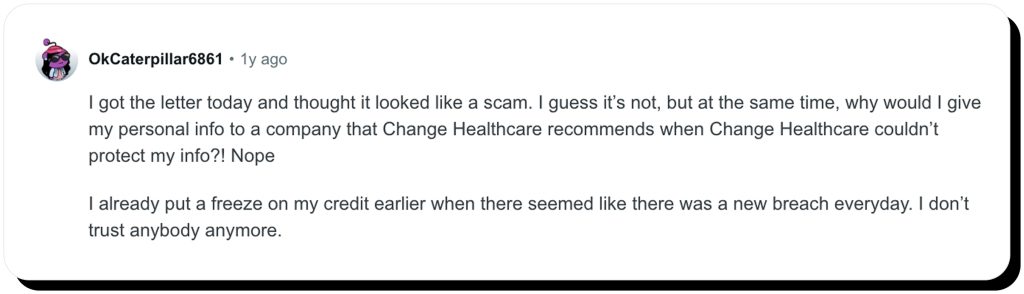
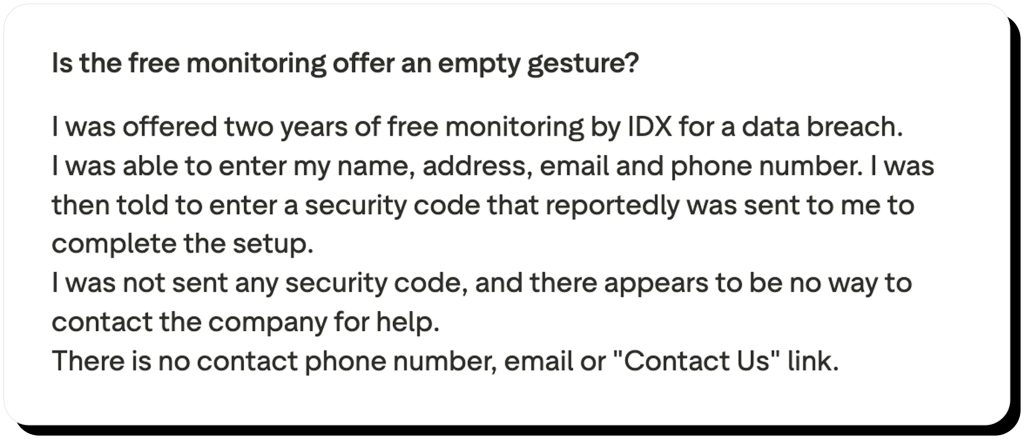
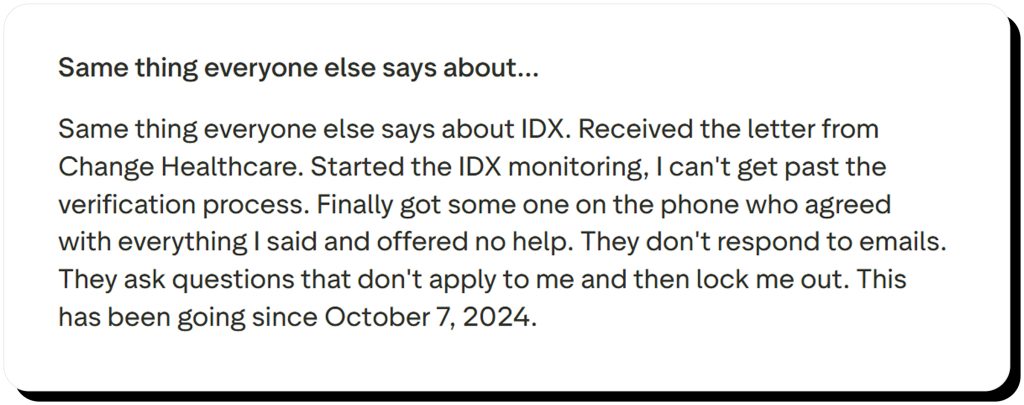
- Check that the letter contains an enrollment activation code that you will need during your registration with IDX. Many customers note, however, that IDX often fails to include these activation codes in their notifications, which complicates the registration process and makes new users turn to the company’s customer service.
One common concern among those who received legitimate IDX data breach notifications is that they came months after the data breach.

While that delay may seem suspicious or frustrating, it is, unfortunately, not unusual. Similar notification lags have caused frustration for victims of other breaches, including the Okta data breach, Delta Dental security incident, Comcast breach, Mr. Cooper data compromise and many others.
What to do if your letter is real
If you verify the letter as legitimate following the tips above, you can:
- Safely enroll in the offered identity protection services following the official IDX instructions.
- Freeze your credit with credit bureaus—Equifax, Experian, TransUnion, and ChexSystems.
- Monitor your financial and insurance statements for suspicious activity.
- Change passwords and enable two-factor authentication for all the affected accounts.
- Request a free annual credit report.
- Set up fraud alerts with your bank or credit institution.
What to do if you suspect your letter is fake
In case the letter shows signs of forgery, the best advice is to ignore it. In addition, make sure you:
- Shred the letter to prevent its reuse.
- Don’t enter personal information on websites cited in the letter.
- Report the scam letter to the Federal Trade Commission.
- Contact the breached company directly and get their first-hand instructions on securing your data if affected.
- If needed, rely on direct credit freezes with credit bureaus and credit monitoring from a trusted provider.
So… is IDX credit monitoring legit and safe?
Yes, credit monitoring by IDX is a legit and safe service. Its plans vary from single-bureau to tri-bureau credit monitoring in addition to a host of other services such as a password manager, dark web scanning, alerts, recovery assistance, and insurance.
Some users, however, report that IDX’s customer support can be slow and the registration process somewhat confusing. These issues may make signing up for free identity protection programs less straightforward or user-friendly.
Beyond breach letters: reduce your online exposure to prevent privacy risks
Data breach notifications are always reactive, sometimes arriving months after the breach actually happened. But is there a way to prevent personal data exposure?
The answer is yes. It’s always better to be proactive and prevent identity theft and other privacy threats by following a few simple steps: use unique, strong passwords and enable 2FA, review your security settings regularly, avoid sharing sensitive information unnecessarily, and preemptively remove your personal data from the internet.
That last step is where Onerep can help. The service scans more than 240 data broker and people-search websites, identifies where your personal records appear, and automatically removes them on your behalf — reducing your risk of being targeted in scams or identity theft attempts.
FAQs about IDX and data breach letters
How do I know if IDX is legitimate?
IDX is a legitimate identity protection and credit monitoring service but it can be impersonated by scammers. Before interacting with an IDX data breach notification letter, verify that it comes from the official source and cites an actual data breach that might have affected you.
Is IDX credit monitoring legit?
Yes, IDX is a legit credit monitoring provider that’s frequently hired by companies affected by major data breaches. IDX handles free credit monitoring for the affected customers on their behalf.
Is it safe to give IDX my SSN?
Before sharing any personal data with any company, IDX included, make sure it’s the original business, not a scammer impersonating it. Only share your sensitive PII with IDX if you confirm it’s the legitimate one and you intend to monitor your credit through them.
Are data breach letters legit?
Mostly yes, but many scammers capitalize on data breach news and prey on their victims who may be seeking recovery assistance. Always cross-check the source and confirm the letter legitimacy before interacting with it.
How to check if your SSN has been compromised?
You can scan the dark web for signs of your SSN surfacing there, as well as review your credit reports for new accounts and set up fraud alerts with your bank.

Mikalai is a Chief Technical Officer at Onerep. With a degree in Computer Science, he headed the developer team that automated the previously manual process of removing personal information from data brokers, making Onerep the industry’s first fully automated tool to bulk-remove unauthorized profiles from the internet.