 Published March 30, 2026
  read
read
Area code 970 spam: how to protect yourself from spam calls and texts
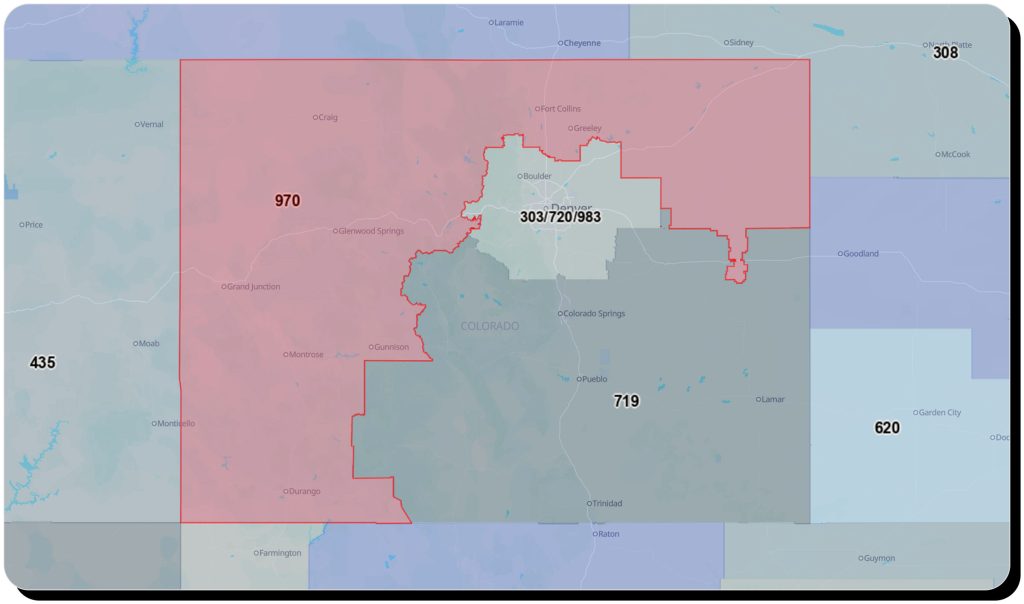
- Area code 970 is located in western, northwestern, and southwestern Colorado.
- 970 spam calls and texts can come from those locations, but calls with that area code can also come from anywhere in the world, as scammers use VoIP technology and spoofing to mask their real whereabouts.
- You can prevent area code 970 spam and scams by screening Caller ID, downloading spam-blocking apps, submitting your number to the Do Not Call Registry, and removing yourself from people-search sites.
Where is area code 970 located?
Area code 970 is located in Colorado, blanketing the western, southwestern, and northern regions of the state. Counties with the highest populations in the 970 area code are Larimer, Weld, Mesa, Garfield, and Eagle; while the largest cities include Fort Collins, Greeley, Loveland, Grand Junction, and Aspen.
The 970 area code became Colorado’s third area code in 1995, as the original 303 code was nearly exhausted. Area code 970 is running out of available numbers today, and in 2025, the 748 code was added as an overlay.
How to identify area code 970 spam calls and texts
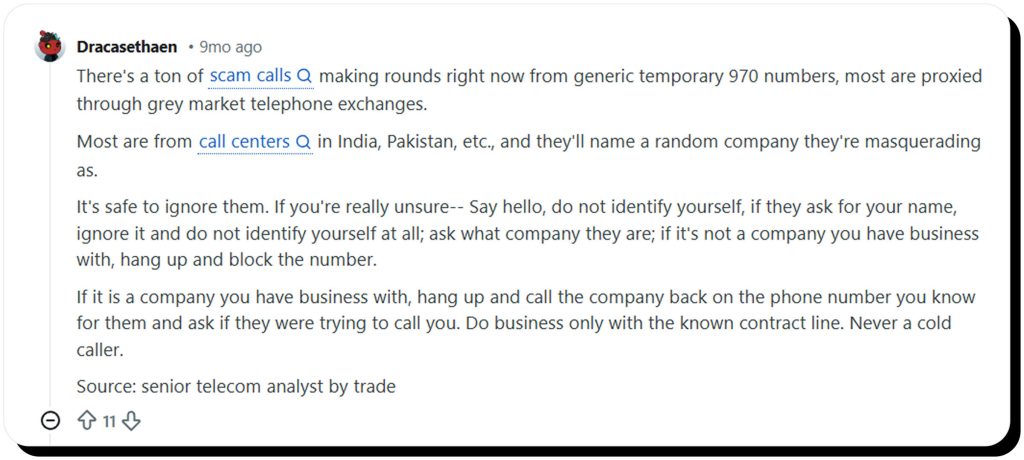
Approximately 1.2 million people live in the 970 area code, so most calls from this region are legit. In fact, most spam calls and texts probably aren’t originating from the 970 area at all. That’s because spammers can use VoIP technology to call from a 970 phone number from anywhere in the world.
According to some reports, over 125 million robocalls were associated with the area code 970 in 2025. That large number demonstrates how important it is to identify scam attempts.
Caller ID warnings
- “Potential Spam,” “Spam Risk,” and “Spam Likely”
- Calls from well-known brands that don’t have offices or facilities in the 970 area
- Repeated calls from the same people and numbers that you don’t know
- Calls from common names (like John Smith), which could be an attempt to trick you into thinking you know the caller
Call and text content
- Robotic voices and recorded messages
- Vague voicemail messages or no messages at all (they hope for a callback)
- Odd pauses in speaking patterns
- Too-good-to-be-true prizes, special deals, and loan forgiveness offers
- Weird payment requests (such as crypto or gift card payments)
- Requests for personally identifiable information, account credentials, and other sensitive data
- A lot of “yes/no” questions
- Job offers, including for jobs you did not apply for
- Missed delivery notices from senders claiming to be UPS, FedEx, or USPS
- Payment confirmations for things you didn’t buy
- Foreign speakers and poor grammar on phone calls, and misspellings in texts
Threats and urgency
- Government agencies such as the IRS, FBI, or Social Security Administration claiming there is a problem, your identity has been compromised, or that you’ll be arrested if you don’t pay a bill or fine
- Debt collection and utility shutoff notices that demand instant payment
- Financial institutions claiming your money has been stolen
- Tech support companies claiming your phone or computer has malware
- Big brand security alerts (Microsoft, Apple, Google, Amazon, etc.)
- Family members with requests for immediate financial help (voice can be cloned with AI)
- Unsolicited text links to verify your account, change your password, or visit a website to fix a “problem”
How to look up the number yourself
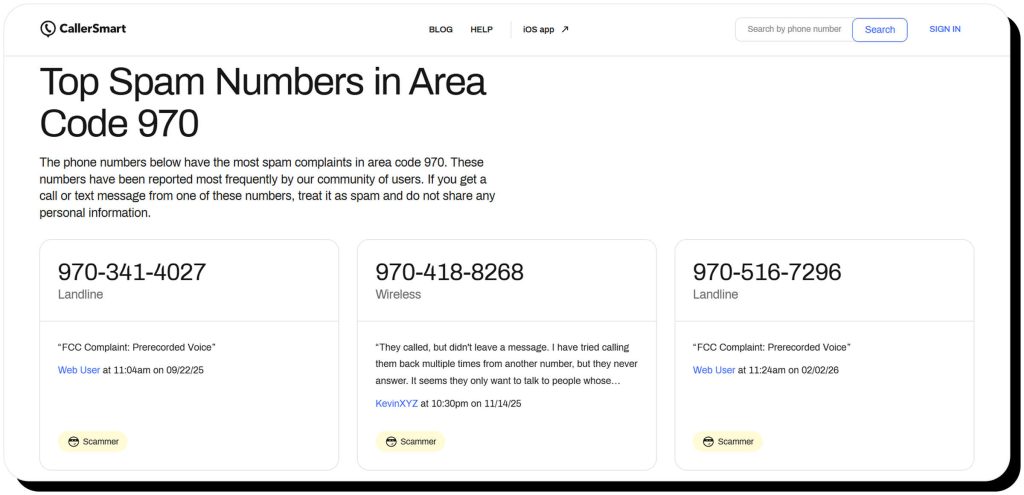
- Spam call lookup: Use a site like CallerSmart or WhoCallsMe to see if the number has been reported as spam. User comments lend insight into which numbers are better avoided.
- Reverse number lookup: See if the number is associated with a legitimate person or business by searching it on sites like NumLookup or Truecaller – but remember that legit numbers can be spoofed.
- Visit contact pages: If a caller claims to represent a business or government agency, browse to the official website (do not click any links in texts) and see if the person and number are listed as official contacts. Better yet, use official contact methods yourself to call directly and verify that they are trying to get in touch with you.
- Google: Search the number on Google to see what information comes up.
How to prevent area code 970 spam
The best way to avoid being scammed is to prevent getting area code 970 spam calls and texts in the first place – here are some proven tactics.
1. Don’t answer
This is the simplest and easiest way to stop yourself from falling victim to spam texts and calls. If you don’t recognize the caller or messenger, don’t answer. You can always evaluate text messages and voicemails later and block any numbers from those you do not know.
2. Install a spam-blocking app
See if your carrier offers a free spam block app. If not, install a well-known and trusted third-party one. Options include TrueCaller, Robokiller, and Nomorobo. They work by identifying and blocking suspected spam calls and filtering suspicious text messages.
3. Don’t follow instructions
If a caller or sender tries to get you to follow instructions – anything from buying gift cards, making a payment, visiting a webpage, answering personal questions, or clicking a link – do not listen. Scammers often convince their victims to send them money or visit websites designed to steal personal information or login credentials and even install malware on their devices.
4. Never post personal information publicly
Is your phone number listed on your social media page? If so, it’s easy for spammers to find it and use it. Watch what you post online, especially contact and personal information that scam artists could use to personalize their attacks.
5. Remove yourself from people-search sites
People-search sites are a subset of data brokers that collect, organize, and publish personal information online for anyone to look up or purchase. Spammers can easily make heavy use of people-search websites because they expose your phone number along with other private details like your birthday, address, relatives, employment history, court records, and more.
The best way to reduce your online exposure is to opt out of people-search sites. You can do this automatically or with the help of an automated service like Onerep.
6. Do Not Call Registry
Submit your number to the Do Not Call Registry to prevent some spam calls. When your number is on the list, telemarketers are not supposed to call you – but that doesn’t prevent spammers operating in other countries.
7. Tell them to stop
Some numbers aren’t technically spam, though you might consider them annoying. Political campaigns, for example, often send text messages to constituents in their districts. Legitimate senders must give you a way to opt out, which typically requires replying “STOP” to their text messages.
What to do if you answered an area code 970 spam call or text
Follow these steps if you believe you accidentally answered a spam call or text message from area code 970.
1. Assess the potential damage
Did you give the spammer any personal information? Did you answer a series of “yes/no” questions? Did you make a purchase? Click a link? Visit a website? Or follow their instructions in any way?
If the answers are no, you probably didn’t give scammers much they could use against you – though if you talked to them, there is always the concern of AI voice clones.
If you gave them information, money, or visited a website, you might need to act fast.
2. Contact financial institutions
Reach out to your bank, credit union, and credit card issuers to tell them you might be a victim of a scam or identity theft. Have them check for unrecognized charges, reverse any fraudulent transactions, and cancel or freeze your debit and credit cards.
3. Contact law enforcement
Contact your local police department and inform them of the scam. Tell them exactly what happened and share the number that called or texted you. Local law enforcement might not be able to make any arrests, but filing a police report can be helpful if you need to make an identity theft insurance claim later.
4. Report scams to the FTC and FCC
Report unwanted calls to the Federal Trade Commission. If you believe you’re a victim of a scam, the FTC also encourages you to report fraud.
You should additionally report spam calls and texts to the Federal Communications Commission (FCC).
Finally, you should forward spam text messages to the Cellular Telecommunications Industry Association at 7226 (SPAM). The CTIA uses that information to improve spam filters.
5. Contact your insurance company
If you have identity theft insurance, contact your insurer to let them know about the potential scam. Note that some homeowner and auto policies come with identity theft coverage, so double-check because you might be covered and not know it.
6. Alert friends and family
It’s a good idea to let friends and family members know you’ve been scammed, even if it’s embarrassing, to ensure they don’t get scammed, too. A scammer can use a people-search site to find your relatives, then call or text them pretending to be you. Alerting them now prevents them from falling victim.
7. Run antimalware software and change passwords
If you clicked a text link or visited a website, it’s possible you unwittingly downloaded malware on your device. Malicious software can spy on your activities, log your keystrokes, and steal your passwords to gain access to your accounts. Scan your devices with antivirus software and change your passwords to protect yourself from these scams.
FAQ
Are all area code 970 calls spam?
No, not all calls from area code 970 are spam. Though millions of spam calls are associated with the 970 area code every year, most calls from this region are legitimate communication between friends, family members, and other people who know each other.
What area code is 970 USA?
The area code 970 location in the USA is a region comprised of western, northwestern, and southwestern Colorado. It does not include Denver, but it does include cities like Greeley, Grand Junction, and Fort Collins.
Why am I getting 970 area code spam calls and texts?
Spammers and scammers like to reach out from area codes you’re familiar with to increase the chances of getting their calls and texts answered. For example, you might be more likely to answer a call if it comes from the area code you live or work in, if it’s from somewhere you often visit, or if a company you buy from is located there. Keep in mind that a 970 area code does not mean the caller is local; they could be using VoIP technology to call from anywhere in the world.
Who calls from area code 970?
Mostly, people who live in area code 970 are the ones who call from that region, but spammers and scammers can also use VoIP and spoofed numbers to make 970 display on your Caller ID.
Is it safe to answer calls from area code 970?
It is safe to answer calls from 970 phone numbers if you know the caller and you are expecting their call, but it’s also important to understand that calls can be spoofed – and with AI, even your loved ones’ voices can be cloned. That doesn’t mean you shouldn’t answer calls, just that you need to be vigilant. However, if you do not recognize the caller, do not answer.
If I change my number, will I stop receiving spam texts and calls?
No, changing your number will not guarantee that you’ll stop receiving spam texts and calls. Even if spam calls subside for a while, spammers will eventually put your new number into their call queues. It’s more effective to use a spam-blocking app.



Mark comes from a strong background in the identity theft protection and consumer credit world, having spent 4 years at Experian, including working on FreeCreditReport and ProtectMyID. He is frequently featured on various media outlets, including MarketWatch, Yahoo News, WTVC, CBS News, and others.