 Published February 12, 2026
  read
read
Employment identity theft: what it is, how it happens, red flags, and what to do if you’re a victim

Employment identity theft happens when someone poses as you to get a job. As odd as it sounds, this type of fraud is increasingly common and difficult to detect.
Unfortunately, most victims of employment identity theft remain unaware of the issue until they need to file their taxes or get social security benefits. Oftentimes, the only indicator that something is wrong is a notice from the Internal Revenue Service (IRS) or Social Security Administration (SSA).
This article will dive into the employment identity theft description, discuss how thieves get your info, and list signs to watch out for. We’ll also include a step-by-step victim checklist and prevention steps. You can usually fix the records and avoid serious repercussions, but you need to act fast.
What is employment identity theft?
First things first: let’s start by discussing the employment identity theft definition.
Employment identity theft is the use of another person’s personal information, such as a Social Security number (SSN) or other personally identifiable information, to obtain a job or earn wages under that person’s name.
Employment identity theft is not as well-known as other types of scams. It’s also often confused with tax-related identity theft and unemployment fraud, which are all different types of fraud.
- The goal of tax-related identity theft is to steal tax refunds by filing fraudulent tax returns. Employment identity theft can also lead to tax problems, but the primary goal of the scammer is to work and earn income.
- Unemployment fraud happens when someone falsely claims unemployment benefits for someone else. The fraudster is only looking to claim the government benefits, not work under your name.
Why would someone want to pose as you in job interviews and tax filings? Simply, they may try to bypass work authorization or background checks, because perhaps they are not legally allowed to work in the US. They could also be trying to avoid tax and legal consequences due to past tax debt, a criminal record, or child support obligations.
How does employment identity theft happen?
I checked my SSA record, and it showed income for a job in Las Vegas that I didn’t work. It gave me the employer’s name, address, EIN, and wages”.
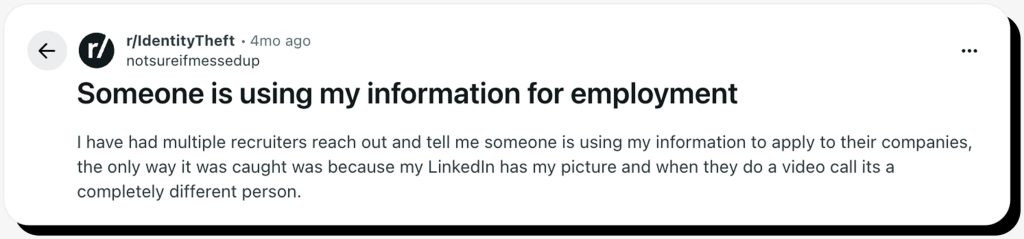
For others, recruiters and companies reached out to tell them someone’s been applying for jobs with their information.
So how does employment identity theft happen? Let’s break it down.
How identity thieves get your information
Fraudsters have their ways of finding your personal information:
- Breaches and credential leaks. One of the most common sources of stolen personal data. High-profile incidents like the TransUnion data breach or the Okta employee health information leak show how names, addresses, dates of birth, SSNs and other identifying details can end up in the wrong hands.
- Phishing for SSN or “onboarding documents”. Heard about those job offer scams on LinkedIn? Or had a fake recruiter/HR member reach out to you asking for personal information?
- Document theft/stolen mail. Your sensitive documents, such as a driver’s license, SS card, W-2s, or benefit letters, could get stolen and misused.
- Insider theft. In some cases, company employees misuse authorized access to tamper with HR records or steal personal information.
- Data brokers and people-search sites. Criminals often use publicly available data (addresses, relatives, past employment, etc.) to make fake applications look legitimate.
What thieves can do when they get it
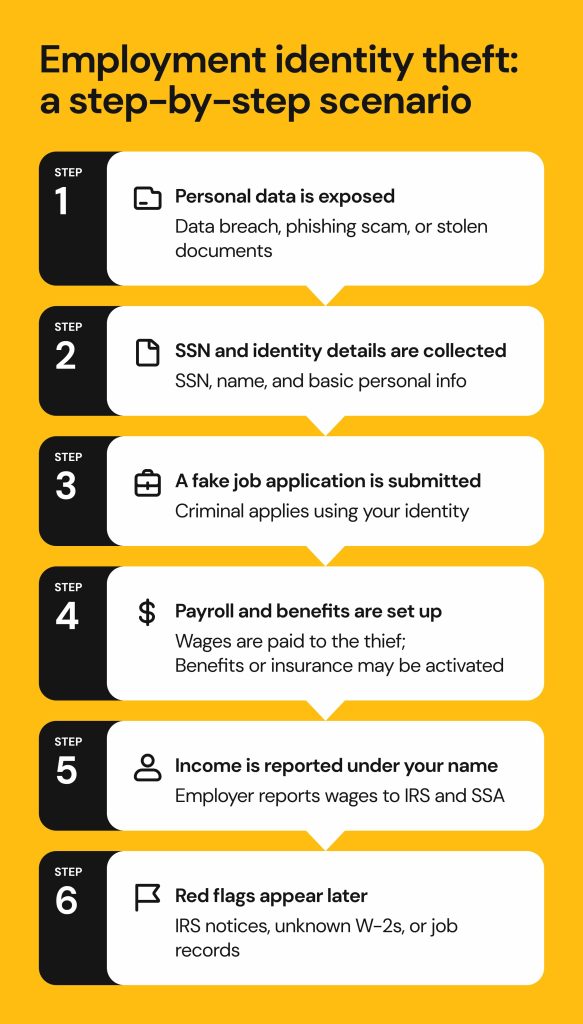
Once someone has access to your SSN or other personal information, they can perform employment identity theft, which can mean a few things:
- Apply for a job using your SSN: Most commonly, they will apply for a job under your name, as they may not have legal permission to work.
- Set up payroll or direct deposit they control: Of course, they will arrange for wages to be paid to their own bank account or another payment method they control. You will be left with income records for money you’ve never made.
- Create a work history trail in your name: Over time, employment identity theft can leave behind employment records that may later appear during background checks or employment verification processes.
- Trigger tax or SSA mismatches: When employers report wages under your SSN, there will be discrepancies with the IRS and SSA. This is often the first sign that something is wrong.
Employment identity theft red flags and signs you may be a victim
Employment identity theft is hard to detect. It may not affect your credit right away, so it can go unnoticed for months or even years.
IRS and tax warning signs
People often realize they’ve been a victim of employment identity theft through tax-related notices.
- IRS CP01E notice is a red flag from the IRS that someone might have used or is still using your SSN for employment.
- CP2000 or related notices about unreported income indicate that the tax returns you filed don’t include all the income reported under your name, perhaps because you yourself never earned it.
- A W-2 or 1099 from an employer you don’t recognize signals that someone might be employed under your name.
Social Security warning signs
Another way to tell something is off is through Social Security records:
- Social Security records showing wages you never earned
- Changes in your Social Security benefits or benefit eligibility due to incorrect income reporting
Background check/employment record warning signs
There are a few more valid indicators:
- Recruiters or employers contact you about roles you’ve never applied for.
- Your credit report lists unfamiliar employers or employment-related verifications. Employers can’t see your credit score, but they sometimes do a so-called “soft inquiry”, which allows them to see some basic information.
- An email from an employer you never worked for about health insurance and other employee benefits.
How employment identity theft can harm you
At first glance, employment identity theft may seem less serious than other types of fraud. In reality, it can lead to significant problems.
- Tax eligibility and problems with the IRS. When wages you never earned are reported under your name, you need to pay the income tax.
- Issues with Social Security records and benefits. Incorrect wage reporting can make you ineligible for certain benefits.
- Professional reputation injury. It could look like you change jobs frequently or have sketchy employers that can’t be verified during background checks.
- Time-consuming identity recovery. Resolving employment identity theft often requires contacting multiple agencies, submitting documentation, and following up repeatedly.
- Higher risk of additional identity theft. If someone succeeded in using your identity for employment, what’s to prevent them from carrying out other forms of identity theft? Scammers could open credit accounts in your name or file fraudulent tax returns.
What to do if you’re a victim of employment identity theft
Don’t report wages you didn’t earn
If you receive a W-2 or 1099 form from an employer you don’t recognize, don’t include that income when filing your tax returns. Instead, contact the SSA to flag and correct the fake earnings records.
Report it and get a recovery plan
If you suspect being a victim of employment identity theft, the next step is to report it. Head over to IdentityTheft.gov, file an FTC Identity Theft Report, and get a personalized recovery plan.
Contact the IRS (follow the notice instructions)
If you received a CP01E or CP2000 letter from the IRS, follow the directions on the letter and respond using the contact info on the notice (not a general IRS number). Even if not, contact the IRS to report that you haven’t earned the income reported under your name.
Contact the Social Security Administration
If you notice inaccuracies in your income history, make sure to reach out to the SSA fraud hotline at 1-800-269-0271. They will review and correct your earnings record if wages are wrong.
Contact the employer involved
Whoever is using your employment identity is also scamming the employer. Reach out to let them know and request that they correct their payroll and tax reporting (W-2 and 1099 forms when applicable). Keep copies of all emails, letters, and case numbers.
Protect your credit and bank identity
Even though employment identity theft doesn’t necessarily mean financial fraud, it’s good to be cautious. You can either place a fraud alert, so that creditors pay extra attention when approving requests, or freeze your credit entirely. Still, review your credit reports regularly for any suspicious activity.
Document everything
Save yourself the headache by documenting every date, name, reference number, and copies of all forms and notices you’ve received.
How to protect yourself from employment identity theft and potentially avoid it
Lock down your tax identity
Set up an IRS Identity Protection PIN (just 6 digits) so that no one can file a tax return using just your SSN.
Create and secure key government accounts
Protecting your government accounts helps protect your identity. If you don’t have it already, create and secure your SSA account, and make a habit of reviewing your earnings. This way, you can spot fraudulent wages early. Whenever possible, set up MFA on your government and financial accounts.
Use E-Verify Self Lock (where it helps)
E-Verify Self Lock can help protect your work identity in certain situations. It’s a free, optional tool provided by the U.S. government that helps block unauthorized employment verification checks tied to your SSN. However, it only works when an employer uses E-Verify during the hiring process.
Harden your “identity surface area”
The identity surface area refers to how exposed your personal information is, in the first place. Reducing that exposure can lower the risk of all types of fraud.
- Use a password manager and create a unique password for each account.
- Turn on MFA, especially for your email (since it’s the key to recovering your accounts).
- Be very wary of fake job postings and “urgent onboarding” requests asking for SSNs or tax forms.
- Don’t carry your Social Security card in your wallet or day-to-day belongings.
How Onerep helps reduce the risk (by minimizing data broker exposure)
Why data brokers matter in employment identity theft
Identity thieves often rely on more than just your SSN to impersonate you. To pass basic identity checks during hiring or onboarding, they may need access to your phone number, email address, home address, and employment-related details.
People-search sites and data brokers often aggregate this information, using data you’ve shared online or that was collected from public and commercial sources.
What Onerep does
No service can prevent identity theft entirely, but Onerep can help reduce the risk by removing your personal information from people-search sites and data broker websites.
Onerep scans 316 data broker platforms, submits removal requests on your behalf, verifies successful takedowns, and continues monitoring for reappearances over time. The process is automated, helping limit how much of your personal data remains publicly accessible.
With less information available online, scammers have fewer details to use, which makes impersonation and employment-related identity fraud more difficult.
FAQs
What happens if someone used my SSN for employment?
If that’s the case, you’ve been a victim of employment identity theft. They can report the wages you didn’t make under your name to the IRS and SSA. This can lead to tax notices, incorrect earnings records, or background check issues. Many victims only find out when they receive IRS letters or tax forms from an unknown employer.
What do I do if someone is applying for jobs in my name?
Report the issue at IdentityTheft.gov to get an FTC recovery plan, contact the SSA to review your earnings record, and notify the employer. Consider using tools like E-Verify Self Lock and monitor your credit and official accounts for further misuse.
Is employer identity theft protection worth it?
This service can be a great tool for monitoring, alerts, and recovery support, but don’t expect it to fully prevent employment identity theft. Go for the one that includes identity monitoring, assistance with IRS/SSA issues, and full recovery support instead of just credit monitoring.
Can identity theft keep you from getting a job?
Unfortunately, yes. Employment identity creates false entries in your work history that may raise concerns about frequent and odd job changes. Those entries are, of course, unverifiable. You may have to explain the issue during the hiring process, if given the opportunity to.
How often does employment identity theft occur?
You’d be surprised at how common employment identity theft actually is. Tens of thousands of wage-related identity theft cases are reported to the FTC each year in the US. On top of that, many cases surely go unreported simply because the victim isn’t aware.
How do I know if someone used my SSN for unemployment?
It’s hard to tell on your own. Most people find out when they receive mail or online notices about unemployment benefits they never applied for, or are contacted by the IRS or SSA. Common red flags include unexpected benefit payments, employer notifications, or state unemployment letters.




Mark comes from a strong background in the identity theft protection and consumer credit world, having spent 4 years at Experian, including working on FreeCreditReport and ProtectMyID. He is frequently featured on various media outlets, including MarketWatch, Yahoo News, WTVC, CBS News, and others.