 Published February 5, 2026
  read
read
Walmart is the first in line among the most impersonated brands, with 16% of all phishing attacks featuring its brand name, and it’s not surprising.
As the number-one retailer in the U.S. and the world’s largest company by revenue, with both offline locations and a popular online marketplace, Walmart is a convenient target for scammers, who can exploit the brand’s recognition and trust among more than 270 million customers served weekly across 19 countries.
In the guide below, you’ll learn how to recognize Walmart scams and avoid Walmart impersonators, along with the steps to take if you believe you’ve been scammed.
What are Walmart scams?
Walmart scams are fraud attempts in which scammers impersonate Walmart or falsely claim affiliation with the brand to steal money, gift cards, or sensitive information such as login credentials, credit card details, or personally identifiable information (SSN, IDs, etc.). These scams rely on brand impersonation and social engineering to pose as legitimate offers and pressure victims into giving away money or sensitive information using urgency, promises of lavish rewards, or even threats.
Walmart scams can be delivered via multiple channels, using:
- Phone calls and robocalls
- Text messages
- Emails
- Regular mail
- Self-checkout kiosks
- Social media posts or ads
- Lookalike websites
While these scams may use Walmart’s brand name, logo, and colors, they are not authorized or operated by Walmart. Still, it’s ultimately up to the targeted individual to determine whether an offer or message is legitimate, as Walmart has no practical solution to combat impersonation attempts due to their scale and variety.
Common types of Walmart scams
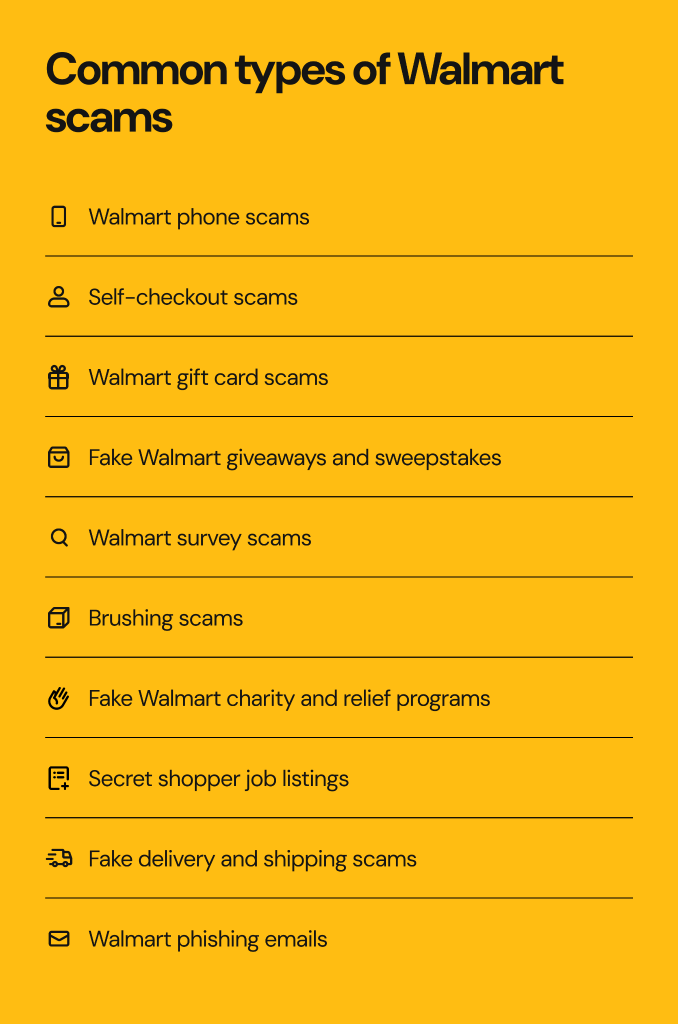
Walmart scams come in a variety of forms. Let’s look at some of the most common types below.
Walmart phone scams
A form of vishing, Walmart robocall scams involve AI-generated voices impersonating Walmart employees who notify recipients about a preauthorized purchase of a PlayStation 5 and instruct them to press 1 or call back to cancel the order. Once connected to the scammers, victims are asked to share personally identifiable information that can be used for identity theft and financial fraud. These Walmart scam calls have been operating since at least 2023, and now this scheme has come under the Federal Communications Commission investigation.
Self-checkout scams
With the rise of self-checkout machines in retail stores, scammers have found ways to exploit them as well. At Walmart stores, scammers initiate the purchase of a prepaid debit card but don’t complete the transaction, leaving the kiosk with the card in their pocket and waiting for the next customer to pay for it along with their own purchases. Often rushed to check out and leave, customers may pay little attention to items already displayed on the self-checkout screen, allowing scammers to pull off this fraudulent scheme.
Walmart gift card scams
Scammers like using gift cards as their go-to cash-out method because they’re practically untraceable. In the case of Walmart gift cards, scams are numerous and take many forms, some of which are listed below.
At least one service offering cash exchanges for unused gift card balances, such as Cardswap Connect, has been repeatedly called out as a scam. When submitting gift cards in exchange for cash, victims not only have their balances drained but also receive nothing in return, despite the promises.
Scammers can also send fake notifications via email, text messages, or messengers claiming that you’ve won a Walmart gift card and need to click a link to get it. These links lead to phishing sites that steal your personal information without delivering the promised payoff.
Finally, in another variation of Walmart phishing scams, bad actors set up spoofed Walmart gift card balance checker websites that also serve as phishing traps to steal the victim’s personal information along with gift card numbers and PINs, which are then used to drain the card funds.
Fake Walmart giveaways and sweepstakes
Most giveaway scams start as Walmart phishing emails claiming there’s a prize you can get by clicking the link in the message, which takes you to a fake website that steals the information you enter.
Another type of fake Walmart giveaway and sweepstakes is particularly popular on social media. For example, there are Facebook posts advertising cash prizes, products, and gift cards in exchange for filling out a form with your personal data. Some victims report their bank accounts being charged afterward.

Walmart survey scams
Some scams offer you the chance to fill out “surveys” in exchange for Walmart gift cards. In reality, these are affiliate marketing programs at best, designed to make you share your personal information in the process. These surveys take multiple steps and screens on purpose, so you get lost in them and never really reach the stage where you can actually claim your gift card.
Remember that even though scammers may disguise these surveys as official, Walmart distributes its services via receipts and official brand channels, such as emails sent from @walmart.com.
Brushing scams
Brushing is a popular scam that involves scammers sending deliveries to your physical address even though you didn’t order anything, for the purpose of faking positive reviews for their online merchant account on well-known marketplaces such as eBay, Amazon, and Walmart.
Since Walmart features multiple third-party sellers on their online marketplace, users report receiving unexpected Walmart packages sent to their address but addressed to other people. Such packages typically contain inexpensive items like hairpins or paper cups but may also include malicious QR codes disguised as links to more information about the surprise package.
Fake Walmart charity and relief programs
Walmart does run charity funding programs under its Walmart.org foundation auspices, but few people know that these programs issue grants only to organizations, not individuals. Despite this, scammers exploit Walmart’s name to trick people into believing they’re eligible for all kinds of Walmart-sponsored charity and relief programs, as shown in the example below.
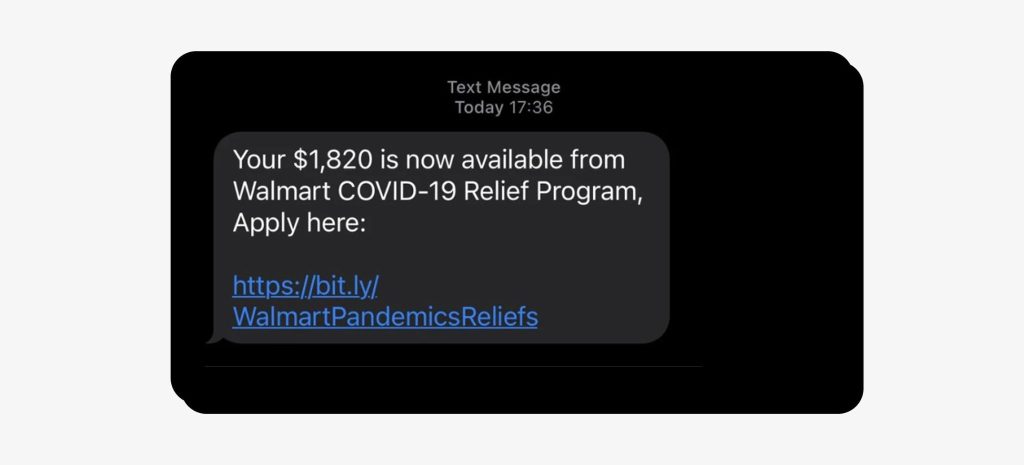
As with other types of Walmart phishing messages, this one is designed to make the user click a malicious link that leads to a data-stealing website or starts an automatic malware download in the background.
Secret shopper job listings
Despite Walmart having no secret shopper or “retail research” programs, there are still many fake job listings advertising well-paid mystery shopper positions. People apply for these roles only to run into a scam. In one example, a targeted person received an envelope containing a fake check for $3,495, along with instructions to deposit the check and buy $3,000 worth of blank Walmart money orders as part of their “assignment.”
Fake delivery and shipping scams
Scammers impersonate Walmart delivery services or couriers, much like they impersonate UPS and other postal agencies.
These scams often start with a Walmart phishing email or text message claiming you have a pending delivery. The message typically contains a link prompting you to update your shipping information, verify or cancel the delivery, or to look up more details about the order. In some cases, the text message asks you to reply with a specific word or phrase—allowing scammers to confirm that your phone number is active and that you may be responsive to further scam attempts.
Walmart phishing emails
Walmart impersonators can also send a variety of phishing emails to trick victims into sharing sensitive information, ranging from Walmart login credentials to Social Security numbers and bank account details. These emails mimic Walmart branding and are easy to confuse with legitimate communication from the retailer.
Such phishing emails may take the form of:
- Account verification emails or emails claiming there’s a problem with your account and asking you to enter your credentials to fix it.
- Fake order confirmation or preauthorized purchase notification emails urging you to click a link to check the order status or cancel it.
- Fake promotions promising big discounts or payouts, with links taking you to a lookalike Walmart website that steals personal information.
Can you get scammed on Walmart.com?
While most scams are associated with Walmart impersonators, there’s still the question: can you get scammed on Walmart’s online marketplace? Yes, and it often has to do with counterfeit products.
Marketplaces are notoriously associated with fake listings, shady merchants who impersonate well-established businesses by taking on their identity, and counterfeit products passed off as originals. These problems persist and give rise to Facebook Marketplace scams and scams on Amazon, despite the platforms’ efforts to strengthen their customer protection policies.
As uncovered by a CNBC investigation, these issues didn’t evade Walmart either. The number of seller accounts on Walmart.com grew by 900% between 2019 and 2024, as the largest U.S. retailer relaxed its seller account-vetting policies in a bid to compete with Amazon, its primary e-commerce rival. In turn, this has led to a surge in counterfeit products on the platform, including potentially harmful food supplements and cosmetics, with some sellers stealing identities from trusted businesses that weren’t represented on the marketplace.
Beyond this, there’s also a risk of encountering scams on lookalike Walmart websites advertised via spoofed online ads, phishing messages, and off-platform communications pretending to be from Walmart.
Real vs. fake Walmart communications
The key distinction between fake and real Walmart messages is that Walmart-authorized communication is typically solicited. It arrives via their official channels, such as your online Walmart account or app, customer service interactions you initiated, or their official website at walmart.com.
Official Walmart representatives never:
- Ask for payment via gift cards, prepaid cards, Walmart money orders, or cryptocurrency.
- Charge fees or taxes to claim prizes, refunds, or promotions.
- Ask for your password or one-time verification code.
- Initiate unsolicited contact to demand money or personal information.
At the same time, bad actors impersonating Walmart often show the following warning signs:
- Using urgency and pressure to make you act quickly.
- Requesting payments via gift cards, prepaid cards, cryptocurrency, or wire transfers.
- Sending suspicious links and attachments in unsolicited messages about orders or account actions you don’t recognize. Such messages often contain links disguised with link shorteners.
- Offering unexpected prizes or refunds in exchange for completing surveys and sharing sensitive information.
- Contacting you using spoofed phone numbers or email addresses that mimic @walmart.com but contain misspellings. For example, the frequently sent 57513 text message is commonly associated with Walmart phone scams.
- Requesting your personal information, including login credentials, bank account details, SSNs, and similar data.
What to do if you’ve been scammed
In the unfortunate event of falling for a Walmart scam, take the following actions to protect your personal data and restore your funds, if possible:
- Stop communicating with the scammer immediately. Hang up the phone or stop replying.
- Take screenshots of the caller ID, emails, and messages to collect evidence for scam reporting.
- Secure your accounts by changing passwords, enabling two-factor authentication (if available), and deleting any account sessions you don’t recognize. If you’ve reused old passwords elsewhere, change them as well.
- Contact your bank or payment card provider to notify them about the scam and cancel any fraudulent transactions. Keep monitoring your financial accounts for unusual activity.
- If you shared your Walmart gift card number and PIN with the scammer, report it to (888) 537-5503.
- If you received an email impersonating Walmart, report it by forwarding it as an attachment to [email protected].
- Report the scam to the Federal Trade Commission or the Internet Crime Complaint Center.
There’s no designated Walmart fraud department phone number, but you can contact Walmart customer support at 1-800-925-6278 (1-800-WALMART) for guidance in your specific case.
How to protect yourself from future scams
Protecting yourself from both Walmart scams and other fraudulent exploits is a matter of healthy digital habits and cyber risk awareness.
Remember to always verify messages before interacting with them, treat any unexpected communication with caution, and use the official websites independently to confirm any unsolicited claims or offers you get.
Walmart impersonators often use common phishing techniques, such as imitating the brand’s style and logo, but not always get it right. Carefully check website links by hovering over them without clicking and verify that the sender’s email domain is @walmart.com. Any misspellings, extra characters, weird formatting, link shorteners, and @gmail.com email accounts are signs that you’re being contacted by a scammer.
Many people fall for Walmart scams because they advertise great discounts, special offers, and exclusive low-effort job opportunities in an attempt to catch your attention. This is done on purpose as scammers exploit human psychology and the fear of missing out. If you get an offer like this out of the blue, always verify it on the official website and never click links in suspicious, unsolicited messages.
Reduce scam risks by protecting your personal data
One of the most effective ways to avoid being scammed is by taking care of your personal data online. Scammers can easily identify potential victims just by browsing publicly available names and email addresses. With Onerep, you can successfully remove your personal information that was made public without your consent from 300+ data brokers and people-search websites, helping limit your exposure to scam attempts.
Start with a free scan to find where your information is publicly listed.
FAQs about Walmart scams
Can Walmart really call or text me?
Yes, Walmart can contact its customers by phone, text, or email for legitimate reasons, such as confirming order, deliveries, or following up on customer service requests. These messages are always solicited and come through Walmart’s official channels.
Are Walmart emails safe to open?
Legitimate Walmart emails that come from the official @walmart.com domain are safe to open. Be cautious of Walmart phishing emails that mimic the brand’s logo and colors but contain malicious links designed to steal your personal information.
Is Walmart.com itself safe to shop on?
Walmart.com is a secure and legitimate online marketplace run by Walmart and is generally safe to shop on. However, it has increasingly been associated with unscrupulous sellers who steal identities from well-established businesses and sell counterfeit products.
Does Walmart ever ask for gift card payments?
No, Walmart doesn’t ask customers to make payments via gift cards. This payment method is completely optional and should be used at the customer’s discretion. Remember never to share your gift card number and PIN with strangers to claim prizes, resolve issues, or receive refunds.


Dimitri is a tech entrepreneur and founder of Onerep, the first fully automated data removal service. Top cybersecurity CEO of 2021 by The Software Report.