 Published November 27, 2025
  read
read
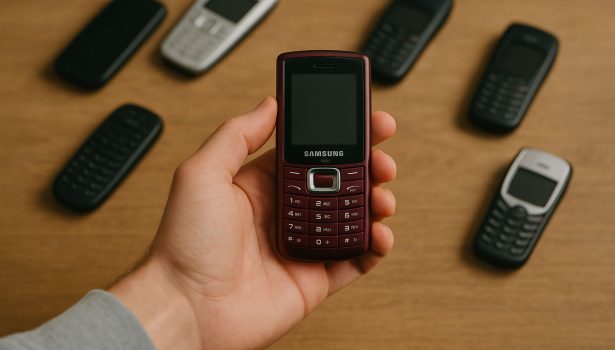
If you believe the word “burner phone” or “burner cell” is a disposable tool used by spies, detectives, or criminals to hide their activities, you wouldn’t be alone. Movies and TV shows depict these people as secretive and nefarious. Yet, the burner phone meaning is quite ordinary and useful for privacy-conscious people today.
A burner phone is a basic prepaid cellphone that offers varying levels of anonymity depending on where you live. It’s widely known as a “burner” because people use them briefly, then discard them. The more you learn about burners, the shadier they may sound. However, people use them to stay anonymous, though it’s not guaranteed.
Yet, the question remains: are these devices relevant in 2025? This guide unpacks what a burner cell is and how it works. You’ll also learn how to purchase a burner phone and explore some alternatives that achieve the same result.
Burner phone meaning and definition
If you’ve ever wondered, “what’s a burner phone” you’re like many others looking for ways to safeguard your privacy. Burner phones are prepaid mobile devices with a SIM card, and in many countries, they don’t require your name, ID, or personal information to register or activate them. Burners operate on a simple pay-as-you go system.
Users purchase a prepaid SIM card, load it with a limited amount of call time, and use it until the balance runs out. Once that occurs, or when the phone is no longer needed, it can be discarded.
These phones are ideal for travel, when convenience is preferred, or to protect your privacy. Still wondering, why is it called a burner phone? Since the term “burner” comes from its original purpose, it makes sense that individuals use the phone briefly, then get rid of it to erase any connection to their identity. Not every prepaid phone works as a burner, but you don’t have to share your personal information to get a burner cell.
Ideally, a burner phone has a number that exists independently of your digital footprint, giving you more control over what information you share.
How do burner phones work?
Burner phones are low-commitment communication tools, but if you’re still asking how do burner phones work, we’ll keep it simple. Burner phones use prepaid plan credits or SIM cards, and most devices are ready to use right away with no long-term contracts.
Here’s the simple process behind how to get a burner phone and use it effectively:
- Buy: Select and buy your prepaid phone or SIM card. According to a recent Wired article, many users opt to pay cash for a burner phone to enhance privacy and minimize traceability.
- Activate: Insert the SIM card and follow the activation instructions. There’s no federal law in the U.S. requiring ID to purchase a burner phone, however, some carriers and states do request ID verification for prepaid phone or SIM card purchases.
- Use: Many burner phones are stripped down to the bare essentials. Users can make phone calls and send text messages, but many devices can’t access the internet or use a camera.
- Discard: Once a burner phone has served its purpose, you can dispose of or “burn” it. Depending on its use, some suggest using a burner phone for one to seven days is ideal for anonymity.
Burner phones aren’t illegal in most countries, and they can help privacy-conscious individuals minimize their exposure. However, maintaining privacy depends on how a person handles their burner phone. It’s also important to note that “burners” can refer to virtual or app-based temporary numbers.
Do burner phones still exist in 2025?
As communication technology moves to encrypted messaging apps, one would expect burner phones to naturally fade away. After all, why rely on a physical prepaid phone when instant global connectivity is available? While the classic prepaid burner phone still exists, the burner phone meaning has shifted alongside modern privacy tools and evolved for the digital age.
Now, they’re often tools for activists, journalists, travelers, and privacy-conscious individuals who want digital boundaries. These individuals might use burner cells to keep their primary phone numbers private, separate work from their personal lives, and avoid annoying telemarketers. That means individuals should choose a burner phone, whether physical or digital, that matches their desire to protect their identity. Many people now use temporary SIM cards, virtual phone numbers, or burner number apps and enjoy similar privacy benefits without carrying a second device.
Temporary SIM cards, or burner SIM cards, are just the SIM card itself. They work like a standard SIM but are purchased separately from a phone, preloaded with limited data or call time, and have no contract. The difference: they can be inserted into any unlocked device to give it a temporary, anonymous number.
Virtual or digital burners are easier to manage, cost less, and can be discarded with a quick tap. However, virtual numbers can be traced if the user links them to a personal account or payment method. Then, there are apps like Google Voice that let users create a disposable number for online listings or travel without needing additional hardware.
Still, not every virtual number service is created equal, and some connect activity back to you. Despite the alternatives, some prefer a good old-fashioned burner phone to keep things simple and offline, especially in areas where SIM registration or network surveillance makes digital tracking more likely.
Even virtual numbers or encrypted apps may leave a digital footprint linked to your online account or payment details. For most people, the “burner phone” today is modern, flexible, and provides a temporary communication solution that separates identity from your main phone number. So, while the tools might’ve changed, they still allow you to control where your information is shared and with whom.
Where to get a burner phone and how much it costs?
We live in a world where personal data is a valuable form of currency. Thankfully, purchasing a burner phone doesn’t require any special connections. Most prepaid phones are available in familiar stores and online marketplaces. Their costs vary depending on their specific features.
How much is a burner phone?
It’s natural to wonder how much a burner phone costs. Since the idea is to replace them frequently, they’re inexpensive, costing between $10 and $50. A basic flip phone is the most common device. It’s also compact and cheap enough to be destroyed once it’s served its purpose.
Some burner phones are low-end smartphones with cameras and app access that cost $60-$100. These prepaid models are typically unlocked smartphones with SIM cards already included.
Where to buy a burner cell
Burner phones are affordable and accessible, and there is no shortage of places to find one.
You can buy them at:
- Electronics stores (e.g., Best Buy, Target)
- Supermarkets and pharmacies (e.g., Walmart, CVS, Walgreens)
- Online retailers (e.g., Amazon)
If you browse these stores, you’ll see many prepaid options, such as Nokia, Motorola, and Tracfone. These brands prioritize affordability and simple setup. Avoid buying the device with your credit card, as electronic transactions tie the purchase to your name or billing address.
Pros and cons of using a burner phone
Part of a burner phone’s appeal is that it’s ideal for anyone who travels or communicates with potential partners from dating apps. Before buying a burner, one must understand its benefits and trade-offs.
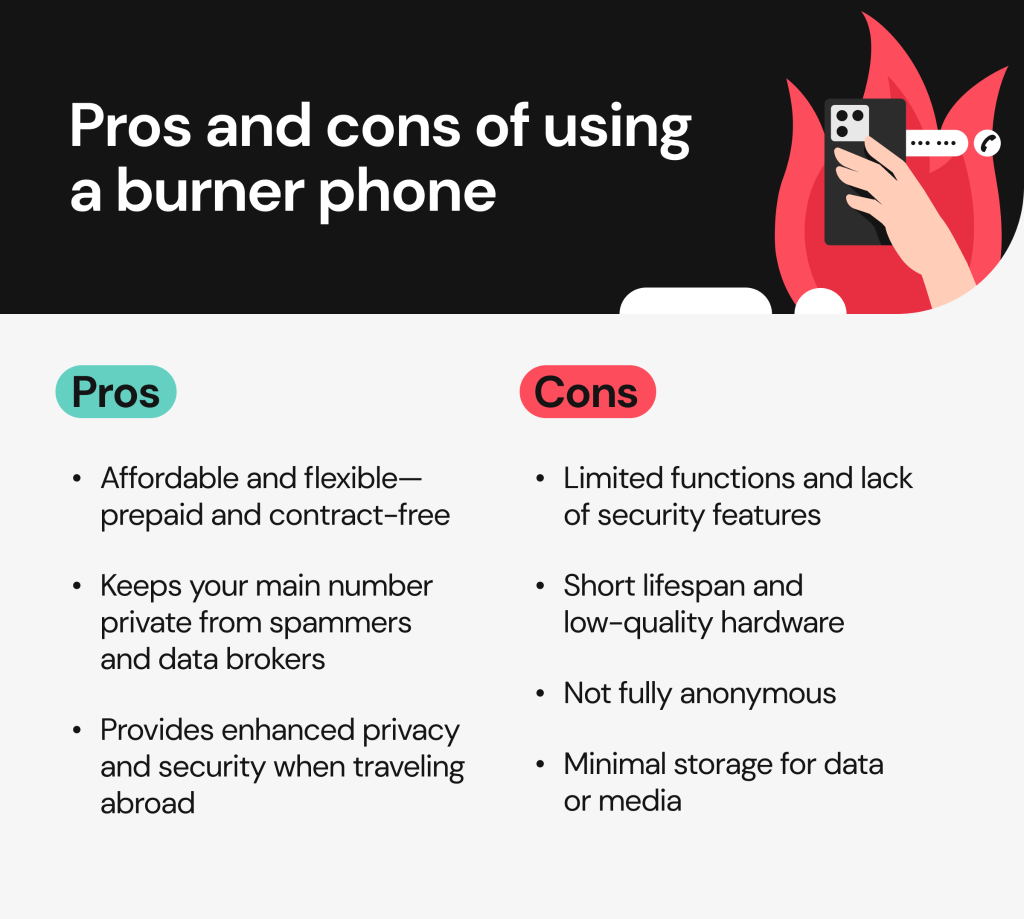
Pros
- Affordable and flexible: Many prepaid phones cost under $50 and don’t need contracts or identity verification.
- Separation from personal data: Bad actors, telemarketers, and various companies want your personal data, but burners keep your main number private and reduce the digital breadcrumbs you leave behind.
- More privacy during travel: Having a prepaid deviceis excellent when traveling abroad, as it limits your exposure to surveillance, data collection from travel-related apps, and roaming scams.
Cons
- Limited functions: Most burner phones are basic, with no internet access, app stores, GPS, or other modern tools. They may not work for everyone.
- Shorter lifespan: Since they’re replaced often, how long do burner phones last? Most last for several months to a year if cared for properly, but they typically have low-quality hardware.
- Partial anonymity: Being truly anonymous is rare. Cellphone networks log Call Detail Records (CDRs). Buying the phone with your debit card or logging into social media apps will link the device to you.
- Less storage: Most burner phones have limited storage capacity, so you can’t store many personal photos, videos, or messages.
- Little to no security features: Burner phones also lack the typical security features that users expect in a mobile phone. They don’t include encryption, regular security updates, or biometric locks, making them easier to access if lost or stolen.
Alone, a burner phone is less effective. It works best when used thoughtfully as part of a larger privacy strategy.
Alternative ways to protect your smartphone’s privacy
Over time, using the same burner phone creates traceable patterns in call records, tower connections, or even voice samples.
Why burner phone anonymity fades over time
Every mobile device interacts with cell networks that record basic metadata, meaning a truly untraceable burner phone doesn’t exist. Law enforcement can track usage patterns to reveal who you are. Anonymity can fade due to:
- Call and text records: Mobile carriers track basic details like call duration, timestamps, and numbers contacted, linking everything back to you, no matter how careful you are.
- Cell location tracking: Each call or text connects your phone to a tower, logging your approximate location and creating traceable patterns.
True anonymity may not exist, but the right privacy tools can limit how much of your data is exposed and make it harder for others to track your activities.
Modern tools that protect your privacy
Every connected burner device leaves digital footprints that could eventually link back to you. These digital breadcrumbs can fuel vishing scams or fraudulent voice calls that use social engineering to extract sensitive information. If you want to manage communication without sacrificing your privacy, there are safer alternatives.
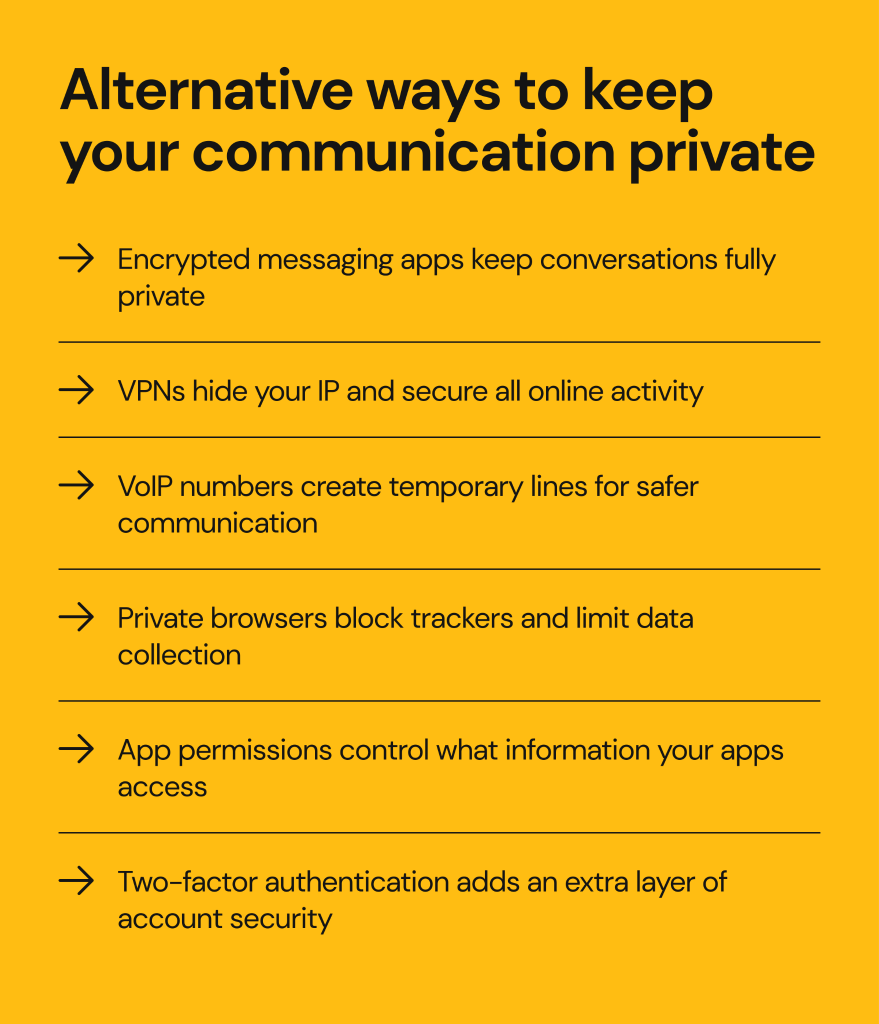
Here are several options that can strengthen your privacy:
- Encrypted messaging applications like Signal and Session use end-to-end encryption, so only you and the recipient can read the messages. They also strip timestamps and contact logs when possible. Encrypted apps provide stronger protection than standard SMS, which can be intercepted or stored by cellphone carriers.
- VPNs (Virtual Private Networks) encrypt your internet traffic and hide your IP address. VPNs make it harder for websites to track your online activity or link it to your location.
- Use secondary or VoIP numbers, though a second device isn’t for everyone. VoIP (Voice over Internet Protocol) platforms create temporary phone numbers. Apps like Hushed let users call and text over the internet instead of cellular networks.
- Private browsers or alternative browsers, like DuckDuckGo and Brave, are safer than mainstream ones like Google Chrome. They can block third-party trackers, integrate with Tor, and minimize the digital footprint from everyday browsing.
- Manage app permissions and data sharing, as many privacy risks come from apps you already use. Audit which apps have access to your device’s camera, microphone, contacts, and location to limit third parties from quietly collecting and sharing your data. Many smartphones also include built-in privacy settings.
- Use two-factor authentication to strengthen your account security with a second factor, such as a one-time SMS code or hardware key. Authenticator apps like Authy are safer than most SMS-based 2FA methods. Threat actors can intercept SMS codes if your number was exposed in a data breach.
These tools form a strong first line of defense, but real privacy starts with reducing your exposure at the source.
Reducing your exposure at the source
Your smartphone might be secure, but your phone number can still appear on data broker sites. People-search sites publish your information, leading to targeted phishing and smishing calls or other social engineering scams. Privacy-focused services like Onerep reduce exposure from potential sources by:
- Continuously scanning 240+ data broker sites to find your sensitive data, limiting how much of your information circulates online.
- Filing automatic removal requests with these sites to delete your data on your behalf.
- Ongoing monitoring of each site and repeating the removal process if brokers relist your information.
Burner phones aren’t a perfect solution. They have limited features, pose some security risks, and can be challenging to maintain long-term. When used wisely, burner phones can help minimize unwanted exposure of your personal information and restore a sense of control in your digital life.
Still, users should pair burner phones with more convenient, modern alternatives to address privacy gaps and build a more comprehensive privacy protection strategy. By doing this, you can protect yourself from data breaches and unwanted calls from scammers, telemarketers, and other bad actors.
Try Onerep to start taking back control of your digital footprint before unwanted calls even begin.
FAQs
Can you text on a burner phone?
Yes, even the most basic burner phones support standard SMS and voice calls.
Are burner phones traceable?
Yes, they are traceable. Carrier networks log call detail records, track locations based on tower interactions, and record how burner phones are purchased.
How long do burner phones last?
The practical lifespan of these devices varies based on how they’re used, the quality of the hardware, and the amount of prepaid credit used to activate them. Some people use them for several months, while others only use them for a week.
Are burner phones illegal?
While some individuals use burner phones for fraud, harassment, and other crimes, burner phones themselves aren’t illegal. Owning and using a prepaid burner cell is legal in the U.S., though some regions require ID to activate them.
Dimitri is a tech entrepreneur and founder of Onerep, the first fully automated data removal service. Top cybersecurity CEO of 2021 by The Software Report.