 Published December 5, 2025
  read
read
Spectrum scam calls: how to recognize and stop them

Scam phone calls and texts have become a daily nuisance. They’re so frequent and intrusive that many people silence unknown numbers altogether, yet scammers still manage to slip through. And when they impersonate trusted brands, even cautious people can get fooled. One of the common scam tactics involves Spectrum scam calls, aiming to steal personal or financial information.
If you recently received an unexpected call from “Spectrum,” you’re not alone. Bad actors impersonate real representatives, target millions of Spectrum customers, and offer account upgrades or limited-time discounts. Scammers also use spoofed phone numbers and professional language to trick victims into sharing sensitive data.
These scams are effective because they exploit the credibility of well-known brands. In this guide, you’ll learn what Spectrum scam calls are, why they happen, the red flags to watch for, and how to stop them.
What are Spectrum scam calls?
Spectrum scam calls are attempts by fraudsters to impersonate legitimate Spectrum representatives. Because Spectrum is one of the largest internet, TV, and phone providers in the U.S., scammers take advantage of its trusted reputation to make their schemes appear credible. These vishing attacks often use pressure tactics to trick victims into paying fake bills, accepting nonexistent discounts, or sharing sensitive information.
A dangerous aspect of these scams is that they can appear to come from real or familiar numbers, such as +1(844) 206-9035 or 888-892-2253. Criminals use caller-ID spoofing to disguise their identity, making it look like Spectrum’s official support or billing lines. With modern VoIP tools, a scammer can manipulate nearly any number to appear trustworthy.
Fraudsters target both subscribers and non-subscribers. To source phone numbers, they rely on data breaches (including a recent Spectrum data breach, people-search websites, data broker databases, and information sold on the dark web. Many victims wonder: Spectrum scamming customers? The answer is no — these calls do not come from the real company.
Another common online search, “Is Spectrum a scam?” reflects a similar concern. Spectrum is a legitimate provider. Like many major brands, it is frequently impersonated by scammers who exploit its credibility to commit fraud.
Why do people keep getting Spectrum scam calls?
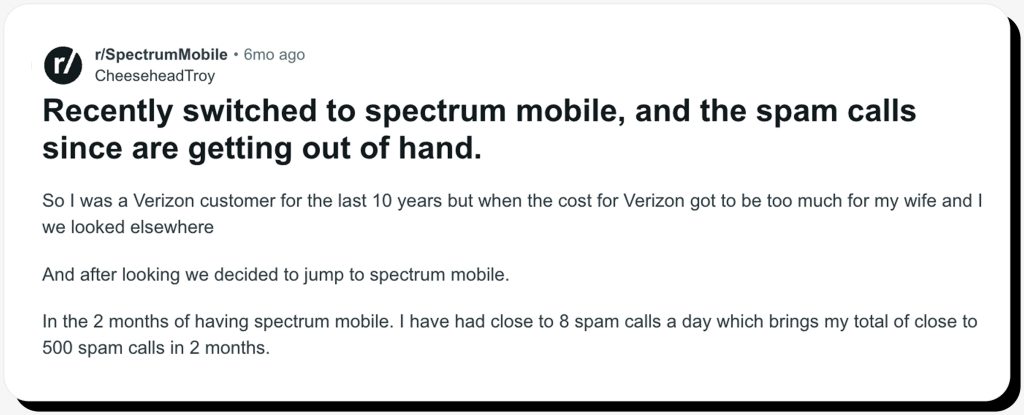
Sharing your phone number with Spectrum isn’t necessary, since scammers have ways to get it. They can expose sensitive information through resources, like:
- Data brokers and people-search sites. These websites continuously collect, publish, and sell phone numbers and other personal information. Data brokers pull sensitive data from public records, marketing databases and plenty of other sources, making your data available to anyone including scammers.
- Previous data breaches indirectly expose sensitive data. Scammers search for phone numbers or other information from earlier breaches to sell on dark web marketplaces.
- Accidental leaks or negligence expose personal information. Though unintentional, a data leak exposes sensitive data and happens due to negligence, human error, poor technological infrastructure, or security gaps. You can learn more about what data leaks are and how they happen by reading this guide.
- Randomized robocall generators dial thousands of numbers every minute. A scammers’ tool belt is evolving, allowing them to invade your privacy much faster. Robocall generators dial thousands of numbers until they find an active one.
- Switching mobile carriers or applying for loans. Unfortunately, even signing up for phone services can lead to a spike in Spectrum scam calls.
How do Spectrum scam calls work?
Not every Spectrum-related scam is the same. Still, scammers usually follow a predictable pattern and reuse the same techniques because they work. Those steps generally involve:
1. First contact: A call comes in that appears to be from Spectrum. A scammer makes the call seem legitimate at a glance by spoofing numbers like 1-844-206-9035. Some calls begin with an automated message before transferring you to a ‘live’ agent.
2. Creating deliberate urgency: Once scammers have you on the phone, they start applying the pressure, making claims that:
- Your account will be suspended because of a late payment.
- You’re using outdated equipment.
- There are unauthorized charges on your account.
- There is a discount or special offer available for a limited time.
Fraudsters want their targets to feel rushed, hoping they will hand over sensitive information without verifying anything.
3. Asking for your information: Next, they try to make you reveal sensitive information and “verify” your account. Spectrum scam artists can ask for:
- Name or address
- Your Social Security number
- Username and password
- Credit or debit card details
Giving away this information could lead to identity theft, Social Security scams, account takeover and compromise.
3. Offering a solution: Next, scammers offer a solution for the problem they created. Common fixes are:
- Sending money using apps like Zelle or Cash App.
- Paying ‘one-time fees’ using Target, Walmart, or Amazon gift cards.
- Asking you to deposit crypto using a Bitcoin kiosk because of technical issues.
- Authorizing a ‘refund’ that instead gives criminals access to your account.
Scammers use these tactics because they move money quickly and leave little trace behind.
4. They follow up later: Even if criminals convince you to fall for their scheme, they often follow up later with texts, emails, or calls. These messages mimic Spectrum notifications to make the lie more believable or install malware on your phone.
Common types of Spectrum scam calls
Spectrum scammers impersonate employees and create urgency around specific scenarios to trick you. Here are some common red flags:
- The 50% (40%) discount scam: Scammers promise to cut your bill in half if you prepay in advance using a Visa prepaid gift card. Sometimes, the anonymous callers reference official terms like ‘account verification’ or current promotions and discounts to sound more convincing.
- Modem or Receiver upgrade scam: These callers claim your equipment is outdated or ‘not compliant’ and request a fee to upgrade to a new device. Scammers may even threaten to disconnect your internet unless you agree. According to Spectrum’s support page, they don’t charge equipment upgrade fees.
- Gift card scam: Some Spectrum scam calls may claim the company owes you money. They will ask you to buy gift cards from Target, Walmart, or Amazon to process the refund and send them the codes. If they get the codes, your money is gone.
- Bitcoin transfer scam: Bad actors will tell you there was a ‘technical compromise’ and instruct victims to deposit money at a Bitcoin kiosk to secure their account. Cryptocurrency is untraceable and can’t be tracked once sent to criminals.
- Text message scams: These Spectrum text scams often appear as texts with a link and claim you’ve won a prize or a free device upgrade. Instead, the links lead to Spectrum phishing websites designed to steal your login credentials or install malware.
- Account verification scams: Sometimes, criminals will ask you to verify your account by providing:
- Your Spectrum PIN
- Login credentials
- One-time passcodes generated for authentication
- Security question answers
How to tell a real Spectrum call from a scam
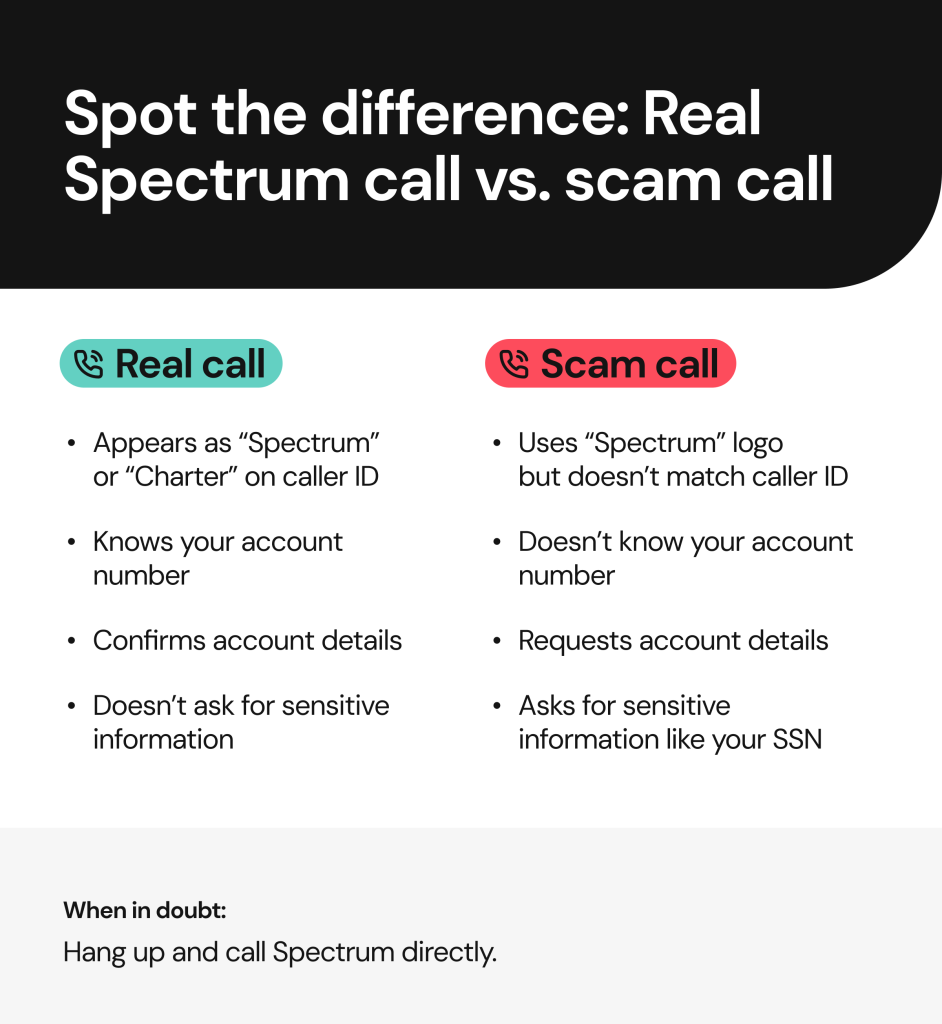
Fraudsters have changed their tactics to make their scams more legitimate. However, there are clear differences between real Spectrum calls and scam attempts. This table details the most important signs:
| Real Spectrum Calls | Spectrum Scam Calls |
|---|---|
| Always come from official numbers, like 1-833-267-6094. | Calls come from spoofed numbers, including 844-206-9035 or 888-892-2253, or unknown local numbers. |
| Never requests payment in cryptocurrency, prepaid debit cards, or gift cards. | Asks for payment through Target/Walmart gift cards, Bitcoin, or payment apps like Cash App. |
| Will only discuss billing, upgrades, or maintenance if you’ve opted in to notifications. | Claims urgent issues, such as overdue bills or equipment failures. |
| Won’t pressure you with threats or deadlines. | Demand immediate action, usually threatening to disconnect service or issue penalties. |
| May confirm limited account details you’ve already provided, such as partial SSNs. | Asks for full SSNs, account numbers, or login credentials. |
| Encourage you to call them back using the number on your statement. | Directs you to odd numbers or insists you stay on the line to prevent ‘service interruptions.’ |
Bottom line
If callers from Spectrum demand quick decisions or ask for payment, it’s a scam. When in doubt, hang up and call back.
Why Spectrum scam calls are dangerous
Spectrum scams are relentless and annoying, like other scams, but they can also cause financial and personal harm. Customers face common risks, like:
- Identity theft: Scammers acquire your personal information and use it to impersonate you. Criminals can also freely open new accounts in your name or take over existing services. To understand how stolen data leads to more fraud attempts, read this article on how to prevent identity theft.
- Data compromise: If threat actors have your personal information, they can resell or merge it with existing data breaches. Over time, your data circulates online, making you more vulnerable to scams.
- Financial harm: Spectrum scams can cost victims thousands in damages. A report from the FTC reveals consumers lost over $12.5 billion to fraud in 2024.
- Phishing chain effect: Interacting with phone scams isn’t recommended because it confirms your number is active. Scammers add your number to live lists, triggering a surge of spam, phishing emails, and smishing attacks.
What to do if you fell for a Spectrum scam call
Scammers have your private information, but it doesn’t mean everything is lost. Still, quick action gives the scammer less time to steal more information, lock you out of critical accounts, or drain your finances. If scammers tricked you, follow these steps:
1. Immediately contact Spectrum
Don’t wait. Contact Spectrum and tell them what information you shared and when it happened. Spectrum may be able to:
- Prevent unauthorized charges.
- Secure or reset your Spectrum account.
- Open an internal fraud review.
If you suspect identity theft, you can report it to Spectrum with a copy of your government-issued ID, a police report confirming fraudulent activity, and proof of residency.
2. Contact your bank or payment processor
You may have shared your debit or credit card information with the scammer or sent them money through payment apps. If you did, contact your bank immediately. If possible, they may be able to:
- Reverse eligible transactions
- Freeze or replace your card
- Monitor your account for suspicious activity
3. Report the scam to investigators
When you report a scam, investigators discover patterns in criminal behavior and warn others of scams. If you sent money to scammers, file a report with:
- The FCC to document spoofed or fraudulent calls
- The FTC and report the incident at reportfraud.ftc.gov
- Local law enforcement, especially if they stole money
- Credit bureaus like Experian, TransUnion, and Equifax to freeze your credit and place a fraud alert in your file
4. Change your online security details
If scammers tricked you into sharing your Spectrum account username, password, or PIN, it’s time to update your login credentials. Change everything and use unique and strong passwords. Next, log in and update your email, banking, streaming services, and social media if you reused the password.
Criminals often test stolen credentials on multiple platforms to force account takeovers and cause more harm.
5. Monitor your credit and watch for more scam attempts
The scam was successful, but it doesn’t mean criminals are finished yet. They may try to pose as Spectrum again, or impersonate your bank or law enforcement. Scammers will claim they can fix the problem.
Ignore them and stay alert for:
- New calls mentioning the previous scam
- Messages asking for more information for verification
- Unexpected authentication codes
How to stop Spectrum scam calls
Spectrum scams are dangerous, but you can protect yourself. Build protective layers with Spectrum’s built-in tools, your device’s settings, and practical privacy habits. Start protecting yourself by:
1. Activating Spectrum Call Guard
Spectrum Call Guard automatically identifies and blocks any known scam numbers. This feature analyzes call patterns and marks suspected spam numbers as “Spam Risk,” much like call filtering systems do against Spam Risk calls. This first layer of defense works by:
- Blocking potential fraud attempts or high-risk numbers in real-time.
- Allowing Spectrum customers to manage their protection level (low, medium, high) through the My Spectrum App.
- Being free for Spectrum Mobile, Spectrum Voice, and Spectrum Business customers.
2. Use your device’s built-in protection
Many mobile devices offer sophisticated, built-in privacy protection. They’re easy to enable and filter unwanted calls before they reach you, sending them to voicemail and reducing interruptions. Here’s how to activate them:
- iPhone: Go to Settings > Apps > Phone > Enable Silence Unknown Callers
- Android: Open the Phone app, which is available on many Samsung and Google devices, and turn on Spam and Scam Protection.
3. Avoid engaging with scam calls
Many people make the mistake of interacting with scammers. Don’t answer or return missed calls from strange numbers. Don’t press any buttons if you received a robocall, even if it’s just to opt out. Any interaction could increase the spam calls you receive.
See also:
How to stop robocalls: 9 steps to secure your phone and avoid scams
4. Safeguard your data online
Spectrum scam calls are less likely to interrupt your everyday life if you can reduce your exposure. It’s possible to limit your exposure online by:
- Changing your social media privacy settings so your personal information isn’t visible
- Limiting where you share your number (e.g., signup forms)
- Removing your number from people-search and data broker websites
How Onerep helps prevent scam calls and data misuse
There may be hundreds of websites that expose your personal information. Finding each one and opting out manually takes a while, and it often has to be repeated, as data brokers republish your data. If you don’t want to track down every data broker by yourself, Onerep can handle it for you.
Onerep’s privacy tool automatically:
- Scans 240+ data brokers and people-search sites to find where your personal data is listed.
- Sends removal requests and verifies when each one is complete.
- Continuously monitors those sites for re-listings to protect your information long-term.
Removing your data from public sites leaves fewer opportunities for scammers to get your number, lessening the chance it will end up in scam call lists and phishing databases.

Mikalai is a Chief Technical Officer at Onerep. With a degree in Computer Science, he headed the developer team that automated the previously manual process of removing personal information from data brokers, making Onerep the industry’s first fully automated tool to bulk-remove unauthorized profiles from the internet.